
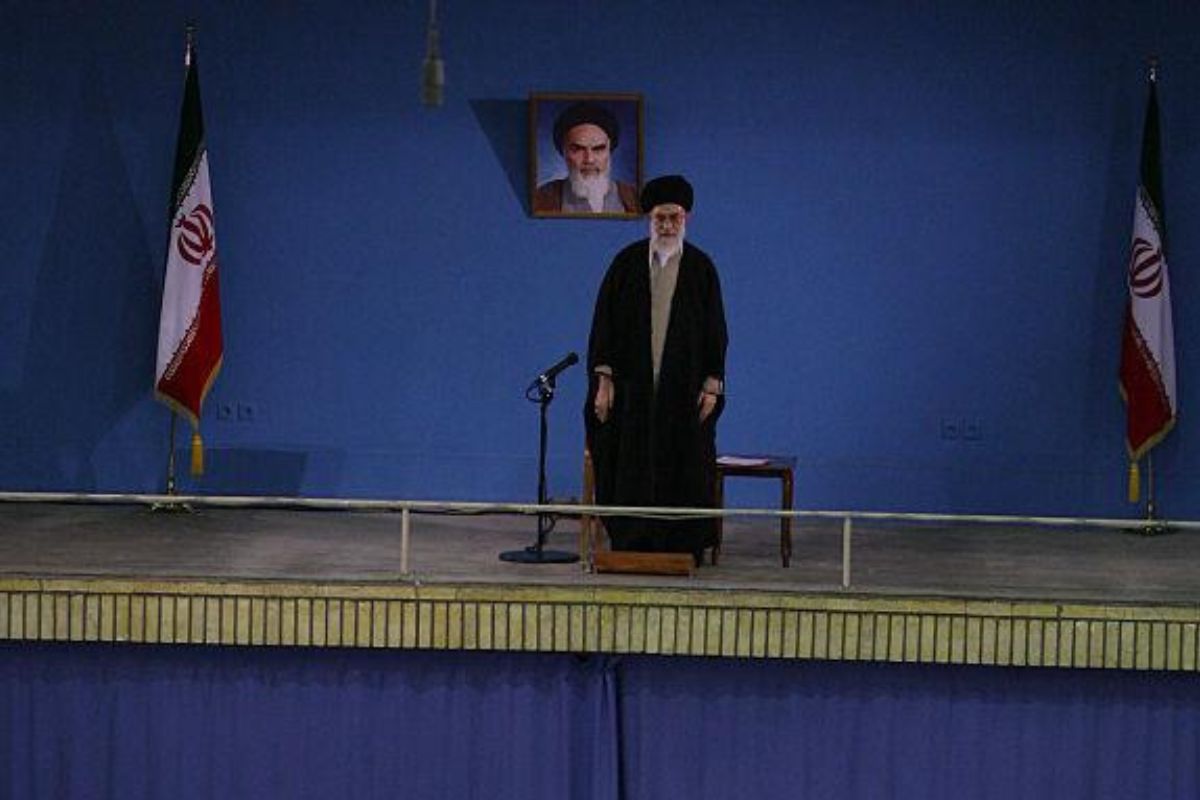
February 28, 2026, is likely to be remembered as one of the most consequential days in modern Middle Eastern history. In a coordinated U.S.-Israeli military operation — publicly known as “Operation Epic Fury” and “Lion’s Roar” — Iranian military infrastructure was struck on an unprecedented scale. By the end of the day, Iran’s Supreme Leader, Ali Khamenei, was confirmed dead.
While the strike itself unfolded in hours, the path to that moment was shaped over years — even decades — of confrontation, proxy warfare, regional miscalculation, and internal unrest.
This is how the region arrived at that decisive moment.
For much of his leadership, Khamenei relied on a strategy built around deterrence and regional influence through proxy groups. At the centre of that network stood the powerful Lebanese movement Hezbollah, long regarded as the crown jewel of Iran’s “Axis of Resistance.”
The network expanded after the 2003 Iraq war and intensified during the Syrian civil war. Iran, through its Islamic Revolutionary Guard Corps (IRGC), backed allied militias across Lebanon, Syria, Iraq, and Yemen. The architect of much of this external strategy was Qassem Soleimani, commander of the IRGC’s Quds Force.
Soleimani’s killing in a U.S. drone strike ordered by then-President Donald Trump in January 2020 marked a turning point. Although Iran retaliated with ballistic missile strikes on U.S. bases in Iraq, the response was calibrated. It signalled Tehran’s preference for controlled escalation rather than all-out war.
That pattern would define the next several years.
The regional equation shifted dramatically after the October 7, 2023, attacks by Hamas against Israel. The unprecedented assault triggered a devastating war in Gaza.
While Hezbollah did not launch a full-scale northern invasion of Israel, it engaged in sustained cross-border exchanges. Analysts later argued that Hezbollah sought to stretch Israeli forces without triggering uncontrollable escalation.
However, the strategy proved costly.
On September 27, 2024, Israel assassinated Hezbollah’s long-time leader Hassan Nasrallah in a major airstrike in Beirut. The operation followed months of Israeli escalation, including covert sabotage operations and air campaigns targeting Hezbollah’s missile stockpiles.
The loss of Nasrallah, following Soleimani’s earlier death, severely weakened Iran’s regional coordination.
April 2024 marked another historic first: Iran launched a direct missile and drone attack against Israel following an Israeli strike on an Iranian diplomatic facility in Damascus. Though most incoming projectiles were intercepted, the precedent was significant.
Later that year, Israel struck back more forcefully, targeting Iran’s air defense systems, including advanced Russian-built S-300 batteries. Observers noted that the strikes degraded Iran’s strategic air shield.
One senior U.S. official described Iran as “essentially naked” after those systems were damaged.
The vulnerability would have direct implications for Khamenei’s security.
Iran’s regional reach had long depended on Syria as a logistical corridor. Tehran and Hezbollah had intervened heavily to support Bashar al-Assad during Syria’s civil war.
But by late 2024, Assad’s position collapsed amid shifting battlefield realities and reduced external support. With Russia focused on Ukraine and Hezbollah weakened, the Syrian regime fell. New authorities in Damascus barred IRGC presence.
The strategic land bridge connecting Iran to Lebanon was effectively severed.
For Tehran, this marked a strategic contraction.
Operation Rising Lion And The 12-Day War
Tensions reached boiling point in June 2025. Israeli Prime Minister Benjamin Netanyahu announced “Operation Rising Lion,” following precision Israeli strikes that eliminated several senior Iranian commanders.
What followed was a 12-day conflict marked by intense aerial exchanges and missile strikes. Israeli aircraft operated deep inside Iranian airspace. The United States later joined with “Operation Midnight Hammer,” deploying B-2 stealth bombers to strike hardened nuclear facilities.
Iran retaliated with ballistic missile attacks targeting regional U.S. bases, including installations in Qatar. But its responses remained measured compared to the scale of damage inflicted.
The war ended without regime collapse — but Iran emerged significantly weakened.
While regional dynamics dominated headlines, Iran’s internal situation deteriorated sharply.
Economic hardship, sanctions pressure, and political repression had fuelled widespread dissatisfaction. The 2022 “Woman, Life, Freedom” protests had already shaken the regime. By early 2026, unrest resurfaced on an even larger scale.
In January 2026, authorities implemented an unprecedented nationwide internet blackout. Reports later described widespread violence by IRGC and Basij forces against demonstrators. Casualty figures remain disputed, but international observers characterised it as the deadliest internal crackdown in modern Iranian history.
The crackdown fundamentally altered international calculations.
President Trump, who had returned to office after winning the 2024 election, publicly condemned the repression and began a large military buildup in the region. Officially, indirect negotiations over Iran’s nuclear program were ongoing. Privately, forces were positioning.
On February 28, 2026, the United States and Israel launched their coordinated assault.
Military analysts describe the operation as unprecedented in scope and integration. Iranian missile facilities, command structures, and air defense nodes were struck within hours. Iranian retaliatory missile launches targeted U.S. bases and civilian infrastructure across the Gulf.
By the day’s end, Israeli officials confirmed that Khamenei had been killed.
The removal of a Supreme Leader — a position central to Iran’s political and religious system — was extraordinary. Since the 1979 revolution led by Ruhollah Khomeini, no Supreme Leader had been assassinated.
Several factors converged:
Individually, these pressures were manageable. Collectively, they reshaped deterrence calculations.
Iran now faces profound uncertainty. The Supreme Leader is not merely a symbolic figure; he sits at the apex of the state’s political, military, and religious authority. Succession under wartime conditions is fraught with risk.
The Assembly of Experts is constitutionally responsible for selecting a new leader. However, with communications disrupted and regional tensions high, the process may be contested.
Externally, escalation risks remain acute. Iran retains ballistic missile capabilities and regional networks, though diminished.
Regionally, Gulf states have heightened security readiness. Israel remains on high alert. U.S. forces continue deployments.
For decades, Khamenei embodied ideological rigidity and strategic caution mixed with calculated risk-taking. His tenure spanned sanctions, uprisings, wars by proxy, nuclear negotiations, and direct confrontations.
Long before his death, analysts debated whether he would soften positions or alter course. Most concluded he would not.
His assassination closes a chapter that began in 1989. Whether it also signals the beginning of structural transformation inside Iran remains to be seen.
For now, one reality stands clear: the strike that killed Iran’s Supreme Leader was not a sudden rupture, but the culmination of years of escalating conflict, eroding deterrence, and narrowing political space — at home and abroad.