
Preparing for CLAT is a long and demanding journey. You start with motivation, discipline, and big dreams of getting into a top law college. But somewhere between daily targets, mock scores, current affairs, and revision pressure, many students begin to feel tired in a way that sleep does not fix. This is not laziness or lack of seriousness. This is burnout.
CLAT burnout is common, especially among students who are sincere and consistent. If ignored, it can affect focus, confidence, and even exam performance. This guide will help you understand what burnout really is, how to recognise it early, and most importantly, how to recover without losing valuable preparation time.
Burnout during CLAT preparation is a state of mental, emotional, and physical exhaustion caused by prolonged stress and overstudying. It happens when your mind does not get enough time to rest, process, and recover from continuous academic pressure.
Burnout is not about studying less or being careless. In fact, it usually affects students who study regularly, follow strict routines, and constantly push themselves to do more. Over time, this pressure starts working against you instead of helping you.
Many students confuse burnout with distraction or lack of discipline. The truth is that burnout is your mind’s way of asking for balance.
CLAT preparation is different from school exams. It requires logical thinking, reading stamina, mental clarity, and emotional stability. Several factors contribute to burnout among CLAT aspirants in India.
One major reason is long study hours without proper breaks. Sitting for eight to ten hours daily with high concentration drains mental energy quickly. Another reason is constant comparison with peers, especially through mock scores and social media discussions.
Fear of failure also plays a big role. Many students believe that one bad mock or one slow month means their chances are over. This mindset creates unnecessary stress. Lack of physical activity, irregular sleep, and skipping relaxation also push students closer to burnout.
Burnout is not sudden. It builds slowly and shows warning signs.
Burnout always gives signals before it becomes serious. Recognising these signs early can save your preparation.
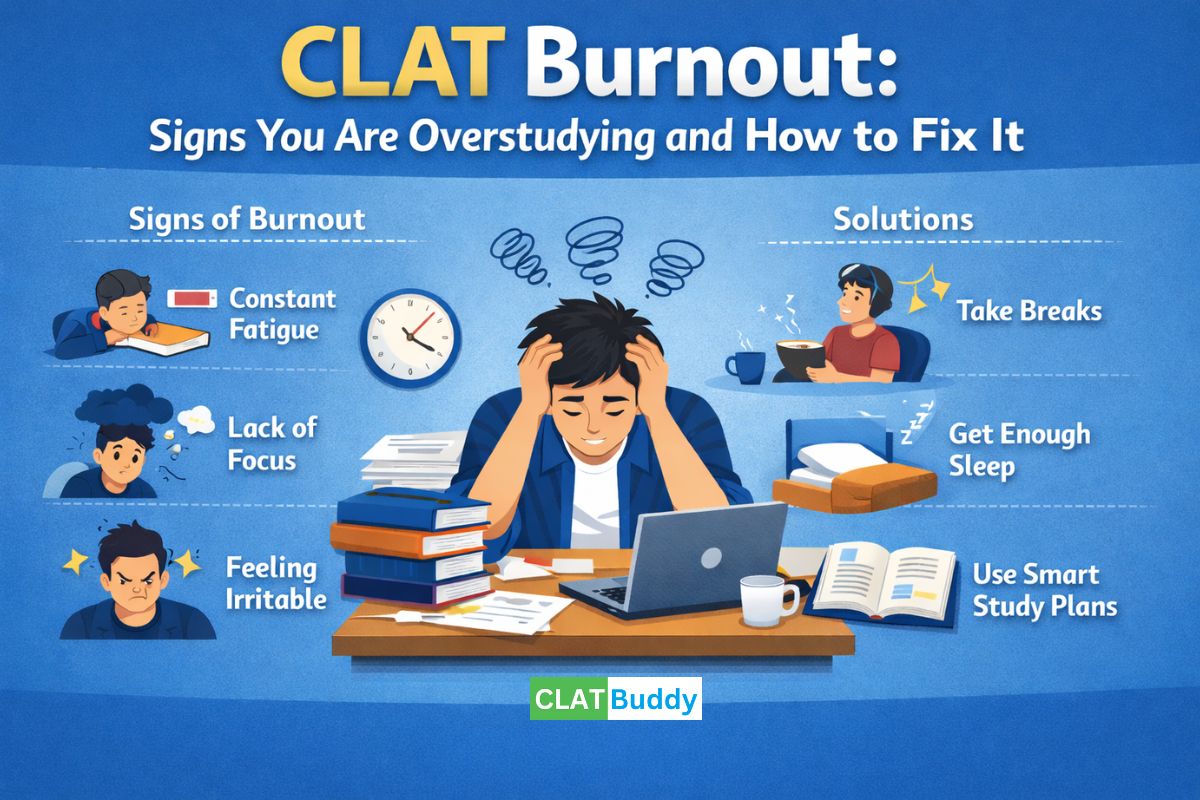
Some students feel constantly tired even after sleeping. Others lose interest in subjects they once enjoyed, like legal reasoning or reading editorials. Difficulty concentrating, frequent headaches, irritation, and self-doubt are also common signs.
You may notice that you are studying for long hours but retaining very little. Mock scores may stagnate or drop despite increased effort. Procrastination, emotional numbness, and a feeling that everything feels forced are strong indicators of burnout.
If you feel that studying has become a burden rather than a goal-driven activity, it is time to pause and reassess.
Feeling tired after a long study day is normal. Burnout is different because rest does not fully help.
Normal tiredness goes away after sleep, a break, or a relaxed day. Burnout stays even after rest. It affects motivation, confidence, and emotional well-being. You may feel detached from your goals and unsure why you started preparing in the first place.
Burnout also affects decision-making. Students start doubting their preparation strategy, coaching choices, and even career decisions without a clear reason. This confusion is mental exhaustion, not lack of ability.
Understanding this difference helps you take burnout seriously instead of pushing harder in the wrong direction.
Yes, burnout directly affects performance in CLAT.
CLAT is not a memory-based exam. It tests comprehension, logic, speed, and accuracy. A burnt-out mind struggles to process passages, misses key details, and panics under time pressure. Even well-prepared students may make avoidable mistakes due to mental fatigue.
Burnout also reduces reading speed and comprehension accuracy, which are crucial for sections like English and Legal Reasoning. Logical Reasoning suffers when focus drops. Overthinking increases, and confidence decreases.
Managing burnout is not a luxury. It is part of smart CLAT preparation.
Recovery does not mean stopping your preparation completely. It means changing how you study so that your mind can heal while you continue moving forward.
The first step is accepting that burnout exists. Pushing harder rarely solves it. You need to reduce intensity, not consistency. Shorten study hours slightly and focus on quality instead of quantity.
Introduce structured breaks. A ten-minute walk, light stretching, or quiet time without screens helps reset your mind. Sleep should never be compromised. A rested brain learns faster than an exhausted one.
Recovery is about balance, not slowing down permanently.
A burnout-safe routine focuses on sustainable effort.
Instead of long continuous sessions, study in focused blocks with breaks. For example, two hours of deep study followed by a break works better than five distracted hours. Rotate subjects to avoid monotony. Reading, problem-solving, and revision should be balanced.
Avoid overloading your day with unrealistic targets. It is better to complete fewer tasks properly than to rush through many topics without clarity. Weekly planning is more effective than daily pressure.
A good routine leaves space for rest, physical movement, and personal time without guilt.
Breaks are not time waste. They are mental maintenance.
Physical movement increases blood flow to the brain, improving focus and memory. Even light exercise like walking or stretching can refresh your mind. Sitting for long hours reduces alertness and increases fatigue.
Mental breaks are equally important. Listening to music, talking to family, or spending quiet time helps reset emotional stress. These breaks prevent burnout from accumulating silently.
A healthy body supports a sharp mind. CLAT preparation is not only about books.
Mock tests are important, but excessive mock pressure can worsen burnout.
If you are taking too many mocks without proper analysis, it increases stress without improving performance. Quality analysis matters more than the number of mocks attempted.
During burnout phases, reduce mock frequency temporarily and focus on understanding mistakes calmly. Avoid emotional reactions to scores. Mocks are diagnostic tools, not judgement of ability.
Once mental balance returns, mock performance improves naturally.
Mindset plays a huge role in recovery.
Stop measuring self-worth through daily productivity or mock scores. Preparation is a long process with ups and downs. One bad week does not define your future.
Replace fear-based motivation with purpose-based motivation. Instead of studying because you are scared of failure, remind yourself why you chose law and what kind of future you want.
Self-compassion improves consistency. A calm, confident student performs better than an anxious one.
If burnout lasts for weeks despite rest and routine changes, it is okay to seek support.
Talk to mentors, teachers, or family members. Sharing stress reduces its intensity. If anxiety or emotional numbness increases, professional guidance can help.
Asking for help does not mean weakness. It shows awareness and responsibility towards your goals.
CLAT preparation is a marathon, not a sprint. Burnout does not mean you are failing. It means you are pushing yourself without enough balance.
A healthy routine, realistic expectations, and mental care are as important as study material and mock tests. When your mind is calm and focused, preparation becomes more effective and enjoyable.
Remember, success in CLAT is not about studying the longest. It is about studying smart, staying balanced, and trusting your journey.