
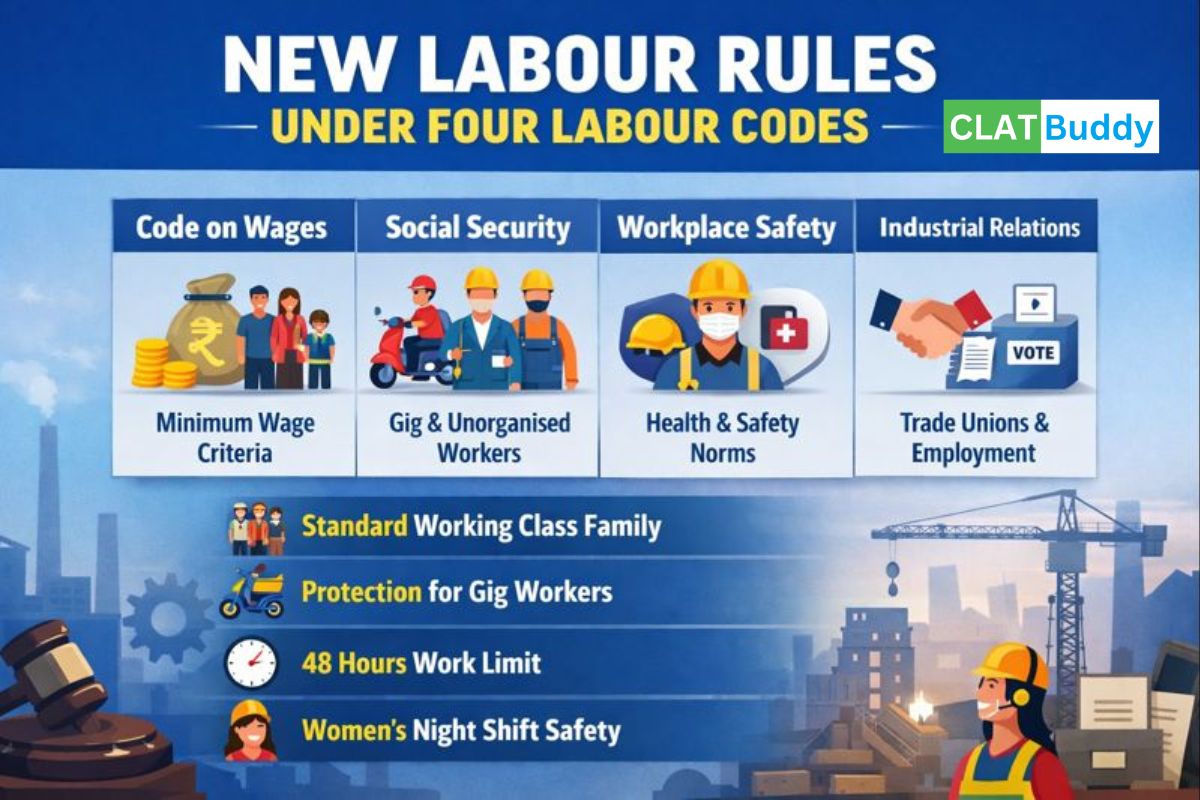
The Central Government has released draft rules under the four Labour Codes, which aim to replace many old labour laws and create a uniform system for wages, social security, workplace safety, and industrial relations.
Under the new draft rules, 18 old wage-related rules will be replaced. The government has clearly defined how minimum wages should be calculated.
Minimum wages will now be based on the idea of a “standard working-class family.” This includes:
The government will also consider:
A technical committee and a Central Advisory Board will help the government decide wage categories and floor wages.
The draft rules under the Code on Social Security replace 12 old laws, including those related to provident fund, gratuity, and insurance.
A National Social Security Board will be formed to look after unorganised workers. Importantly, gig workers and platform workers (like delivery partners and app-based workers) will also be represented on this Board.
Another key change is that establishments with 50 or more employees must provide crèche facilities for children below six years of age.
The rules under the Occupational Safety, Health and Working Conditions Code combine 13 older laws related to factories, mines, construction work, migrant workers, and journalists.
Some important points include:
Special safeguards have been added for women working night shifts, such as written consent, safe transport, and CCTV surveillance.
The Industrial Relations Code brings clarity on how trade unions are registered and verified. It allows secret ballot voting to determine representative trade unions.
Workers are classified into different categories such as permanent, temporary, apprentice, probationer, and fixed-term employees. Fixed-term employment means hiring workers through a written contract for a specific period.