
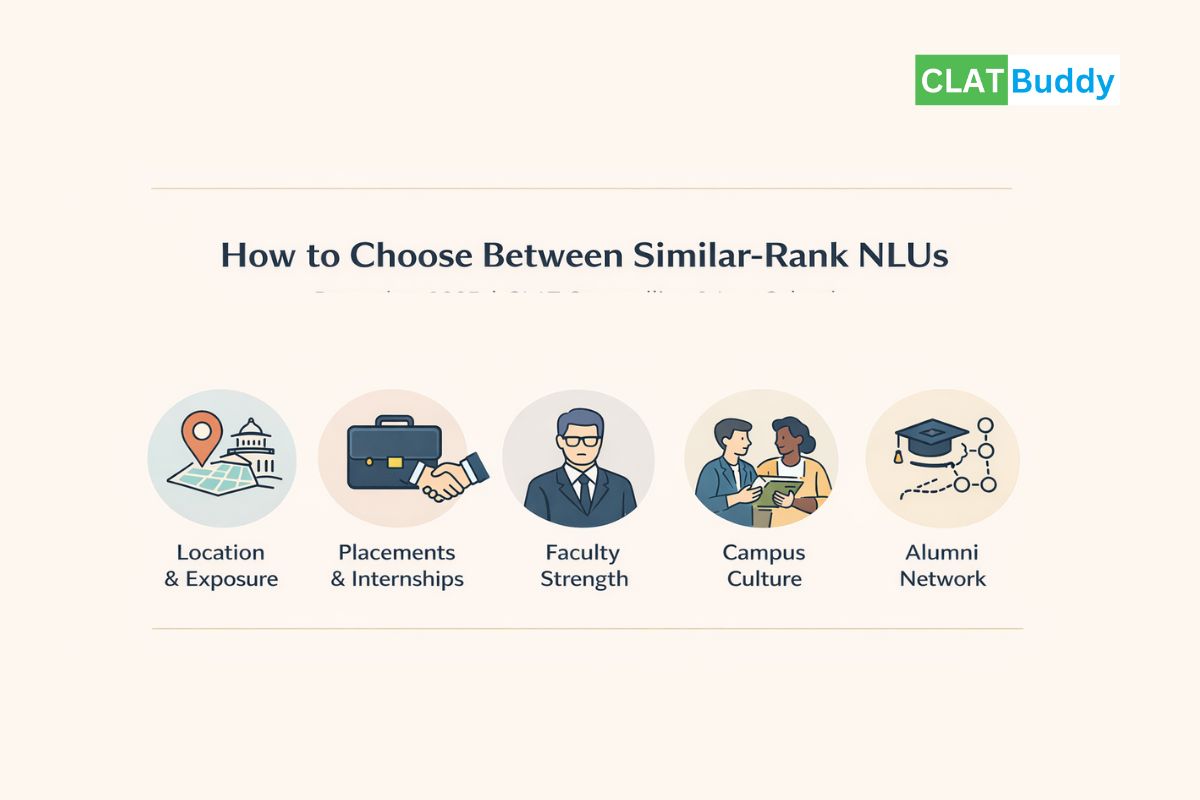
How to Choose Between Similar-Rank NLUs?

Choosing between National Law Universities that are close in rank can feel confusing, especially when the rank difference is just one or two positions. At this stage, many students feel stuck because all options seem equally good on paper. What truly matters is how well an NLU fits your goals, learning style, and long-term plans. This guide will help you make a confident and informed decision, step by step.

Why Do Similar-Rank NLUs Feel So Hard to Choose Between?

When NLUs are ranked close to each other, their academics and reputation often look similar. This is where many students make the mistake of relying only on rankings. Rankings matter, but they do not tell the full story.

Two NLUs with similar ranks can differ widely in:

  • Faculty involvement
  • Internship exposure
  • Campus culture
  • Location advantages
  • Alumni support

Understanding these differences is what helps in making the right choice.

Should Ranking Be the Deciding Factor?

Ranking should be a starting point, not the final decision.

A difference of one to three ranks usually does not create a major gap in:

  • Teaching quality
  • Degree value
  • Career opportunities

Instead of asking which NLU is ranked higher, it is better to ask:

  • Which NLU suits the career path being targeted?
  • Which environment will support personal growth?

This shift in thinking makes the decision clearer.

How Important Is Location When Choosing Between NLUs?

Location plays a much bigger role than many students realise.

City-Based NLUs

NLUs located in major cities offer:

  • Easier access to courts, law firms, and NGOs
  • More guest lectures and legal events
  • Better internship opportunities during semesters

Remote or Semi-Urban NLUs

These NLUs often provide:

  • Fewer distractions
  • Strong campus bonding
  • More focus on academics and mooting

An opening thought here is simple. Students who thrive on exposure and networking may prefer city NLUs, while those who value a quiet academic environment may do better elsewhere.

How Do Placements Really Differ Between Similar-Rank NLUs?

Placement statistics often look impressive across NLUs, but they must be read carefully.

Things to Check in Placement Data

  • Number of students placed, not just highest package
  • Median or average packages
  • Type of recruiters visiting campus
  • Corporate versus litigation focus

Some NLUs perform better in corporate placements, while others have stronger litigation or judiciary-oriented outcomes. The right choice depends on long-term career goals.

Does Faculty Quality Matter More Than Infrastructure?

Both matter, but faculty quality usually has a deeper impact.

Faculty-Focused Indicators

  • Full-time professors versus visiting faculty
  • Research publications and academic background
  • Accessibility and mentorship culture

Infrastructure-Focused Indicators

  • Library size and access to legal databases
  • Hostel and classroom facilities
  • Moot court halls and research centres

A well-maintained campus is helpful, but strong faculty guidance often shapes better law graduates.

How to Compare Internship Opportunities Across NLUs?

Internships form the backbone of legal education.

An opening perspective here is that internships depend both on the institution and the student’s initiative.

Institutional Support to Look For

  • Internship and placement committees
  • Official internship tie-ups
  • Alumni-driven opportunities

Student-Driven Factors

  • Proximity to courts and offices
  • Academic flexibility for internships
  • Peer culture that encourages practical exposure

Some NLUs have structured internship calendars, while others allow students more freedom to explore on their own.

Does Campus Culture and Peer Group Really Matter?

Yes, it matters more than many realise.

Five years in law school shapes:

  • Confidence
  • Professional ethics
  • Communication skills
  • Mental health and motivation

Healthy Campus Culture Includes

  • Competitive but supportive peer groups
  • Active student societies
  • Open discussions and debates
  • Balanced academic pressure

Speaking to current students and seniors often gives the clearest picture of campus life.

How Important Are Moot Courts and Academic Competitions?

For students interested in advocacy, mooting culture is crucial.

What to Evaluate

  • Frequency of participation in national and international moots
  • Institutional funding and faculty support
  • Track record of wins and representations

Some NLUs are known for strong mooting traditions, while others focus more on research papers and conferences. The choice should align with academic interests.

Should Alumni Network Influence the Final Decision?

Alumni networks quietly shape careers long after graduation.

Strong Alumni Networks Help With

  • Internship referrals
  • Career guidance
  • Litigation chambers and firm placements
  • Higher studies recommendations

Older NLUs generally have larger alumni bases, but younger NLUs may have more engaged and accessible alumni communities.

How Can You Create a Personal Comparison Checklist?

A simple checklist helps remove confusion.

Suggested Comparison Points

  • Location and exposure
  • Placement trends
  • Faculty strength
  • Internship opportunities
  • Campus culture
  • Alumni engagement
  • Personal comfort and adaptability

Ranking these factors based on personal priorities often reveals the best choice naturally.

What Common Mistakes Should Be Avoided During CLAT Counselling?

Many students make rushed decisions during counselling.

Mistakes to Watch Out For

  • Blindly following rank lists
  • Ignoring mental health and environment
  • Choosing based on hearsay
  • Overvaluing short-term brand value

Counselling choices should be made calmly and with proper research.

How to Make the Final Decision With Confidence?

At the end of the day, choosing between similar-rank NLUs is about clarity, not pressure.

The most successful law students are not always from the highest-ranked institutions. They are the ones who:

  • Use available opportunities fully
  • Build skills consistently
  • Stay focused on long-term goals

Trusting informed judgment is more important than chasing perfection.

Your Next Step Towards Law School Success

Choosing the right NLU is just the beginning of the journey. Success in law school depends on how skills are built from day one, including legal reasoning, writing, internships, and exam strategies.

For structured guidance on building these foundations early, CLAT aspirants can explore curated preparation resources and mentorship-driven learning pathways designed specifically for law entrance exams and law school readiness.



Calling all law aspirants!

Are you exhausted from constantly searching for study materials and question banks? Worry not!

With over 15,000 students already engaged, you definitely don't want to be left out.

Become a member of the most vibrant law aspirants community out there!

It’s FREE! Hurry!

Join our WhatsApp Groups (Click Here) and Telegram Channel (Click Here) today, and receive instant notifications.

CLAT Buddy
CLAT Buddy
CLATBuddy Popup Banner New