
If you are preparing for CLAT, AILET, SLAT, or other law entrance exams, you already know that legal reasoning passages can feel intimidating, especially when the topic is unfamiliar. You may open a passage and see terms like constitutional morality, tortious liability, data protection, or arbitration, and immediately feel stuck.
Here is the truth. You are not expected to know the topic beforehand. You are expected to read, understand, and apply logic.
In this guide, you will learn exactly how to handle unfamiliar legal topics in passages, how to improve your legal reasoning for CLAT, and how to stay calm and confident in the exam hall.
This article is written to guide you step by step, like a mentor sitting beside you.
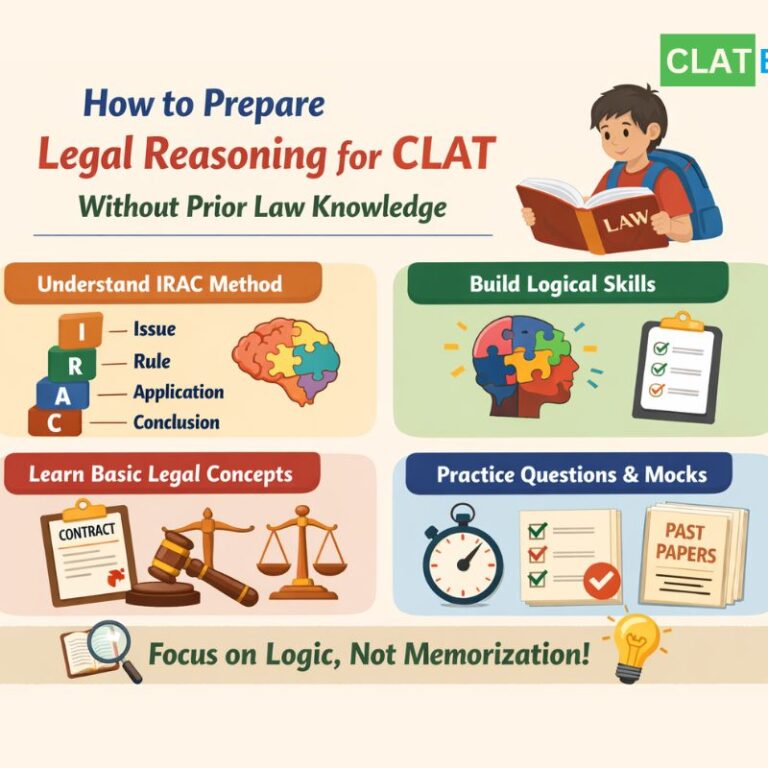
CLAT legal reasoning is not a test of prior legal knowledge. It is a test of reading comprehension, logical thinking, and application skills.
The Consortium clearly states that the legal section is designed to test your ability to:
That is why passages may include topics such as:
You might not have studied these topics formally. That is completely fine. The exam is structured in a way that the principle or rule is given in the passage itself.
Your job is not to be a lawyer yet. Your job is to read carefully and think logically.
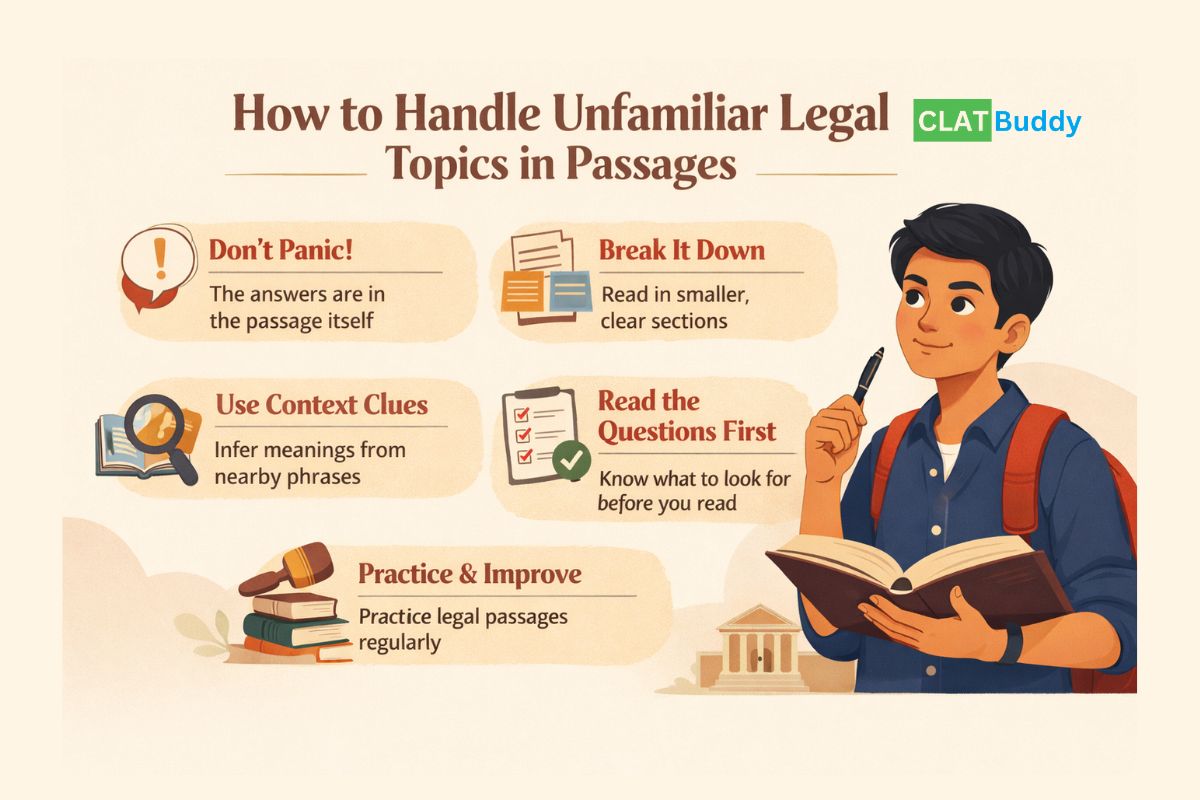
The first step is to control your reaction.
When you see a new topic in a CLAT passage, do not think, “I have never heard of this. I will get it wrong.”
Instead, tell yourself, “Everything I need is inside this passage.”
Now let us break down what you should actually do.
Most CLAT legal reasoning passages follow a structure:
When you read the first paragraph, ask yourself:
Once you identify the structure, the passage becomes easier to handle.
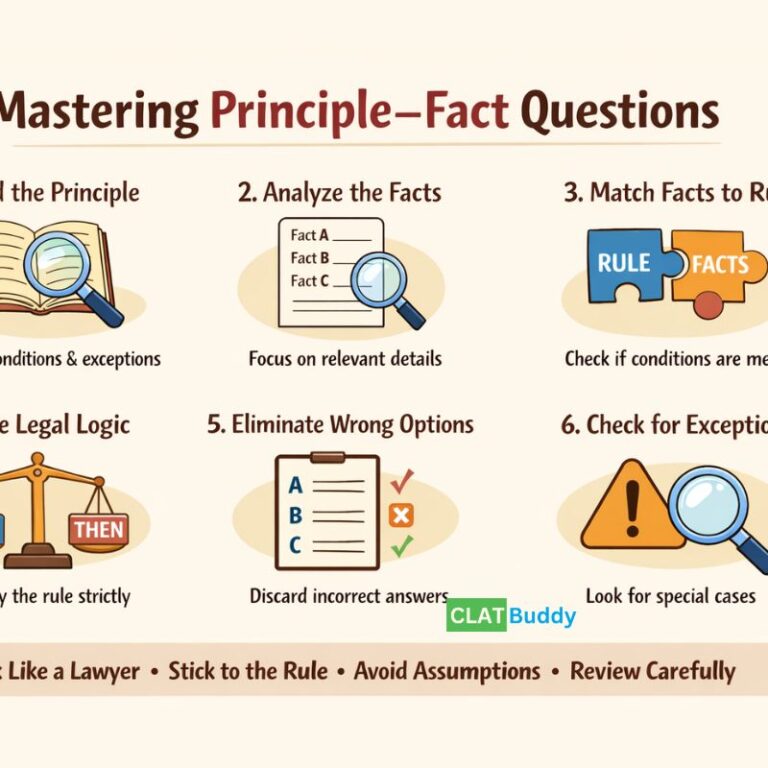
In legal reasoning for CLAT, the most important part is the principle.
You should underline or mentally note:
For example, if a passage explains negligence, focus on elements like duty of care, breach, causation, and damage.
Even if you have never studied tort law, if the passage explains the rule clearly, you can answer the questions correctly.
The answer is no.
One of the biggest mistakes CLAT aspirants make is using outside knowledge. You might know something about a real Supreme Court case from the news. But if the passage defines the rule differently, you must follow the passage.
In law entrance exams in India, your answers must be strictly based on the information given.
If your school teacher said something different, ignore it for the purpose of the exam.
You are being tested on reading comprehension and application, not memory.
You will definitely encounter unfamiliar legal terms in CLAT passages. Words like ultra vires, mens rea, proportionality, or fiduciary duty may appear.
So what should you do?
Most of the time, the meaning of the term is explained indirectly in the sentence.
For example:
If the passage says, “A fiduciary relationship is one where a person is bound to act in the best interest of another,” you can infer the meaning without memorising the term.
You do not need to remember the Latin phrase. You need to understand what the rule is doing.
Ask yourself:
If you understand the function of the rule, you can solve the question.
Many students ask whether they should read questions first or read the passage first.
For CLAT, the best approach is:
The questions usually present new factual situations. Your job is to apply the rule to those facts.
When solving questions:
Remember, CLAT legal reasoning is often about small details. A single word like intentionally or knowingly can change the correct answer.
If you struggle with unfamiliar topics, the solution is regular exposure.
You can start reading:
This improves your comfort with legal language.
While preparing for CLAT and AILET, practice legal reasoning passages under timed conditions.
This helps you:
After every mock test, ask yourself:
This reflection improves accuracy.
Handling unfamiliar legal topics is not just about strategy. It is also about mindset.
On exam day:
If one passage feels difficult, do not let it affect the next one.
Every student in the hall sees the same passage. If it feels difficult to you, it feels difficult to others too.
Your calmness can become your advantage.
Learning to handle unfamiliar legal topics is not just useful for cracking CLAT. It prepares you for law school and beyond.
In law school:
If you build the habit of structured reading and logical thinking now, you will find your first year of law much easier.
This is exactly what top NLUs look for. They want students who can think like future lawyers.
Let us quickly address the mistakes you should avoid:
If you eliminate these mistakes, your legal reasoning score can improve significantly.
Confidence comes from clarity and practice.
Start with easier passages. Gradually move to more complex ones. Track your improvement.
You can also:
When you consistently practice, unfamiliar topics stop feeling unfamiliar.
You do not need to know the entire Indian Constitution to solve a CLAT passage.
You do not need to memorise every legal term.
What you need is:
If you train yourself to rely on the passage, identify the principle, and apply it systematically, you can handle any unfamiliar legal topic confidently.
As your mentor, let me tell you this clearly. Legal reasoning is a skill. Skills are built with practice. You are not expected to be perfect from day one.
Every mock test you solve, every passage you analyse, and every mistake you correct brings you one step closer to your dream NLU.
Trust the process. Stay consistent. Keep reading.
And the next time you see an unfamiliar legal topic in a passage, smile and tell yourself, “I know how to handle this.”