
Preparing for CLAT can feel overwhelming, especially when everyone says “read the newspaper daily.” The real question is not whether to read the newspaper, but how to read it in a way that actually improves your score.
If done correctly, newspaper reading can boost your legal reasoning, reading comprehension, vocabulary, and current affairs all at once. But if done randomly, it can waste hours without results.
This guide will help you understand exactly how to read newspapers for CLAT like a topper, even if you are just starting out.
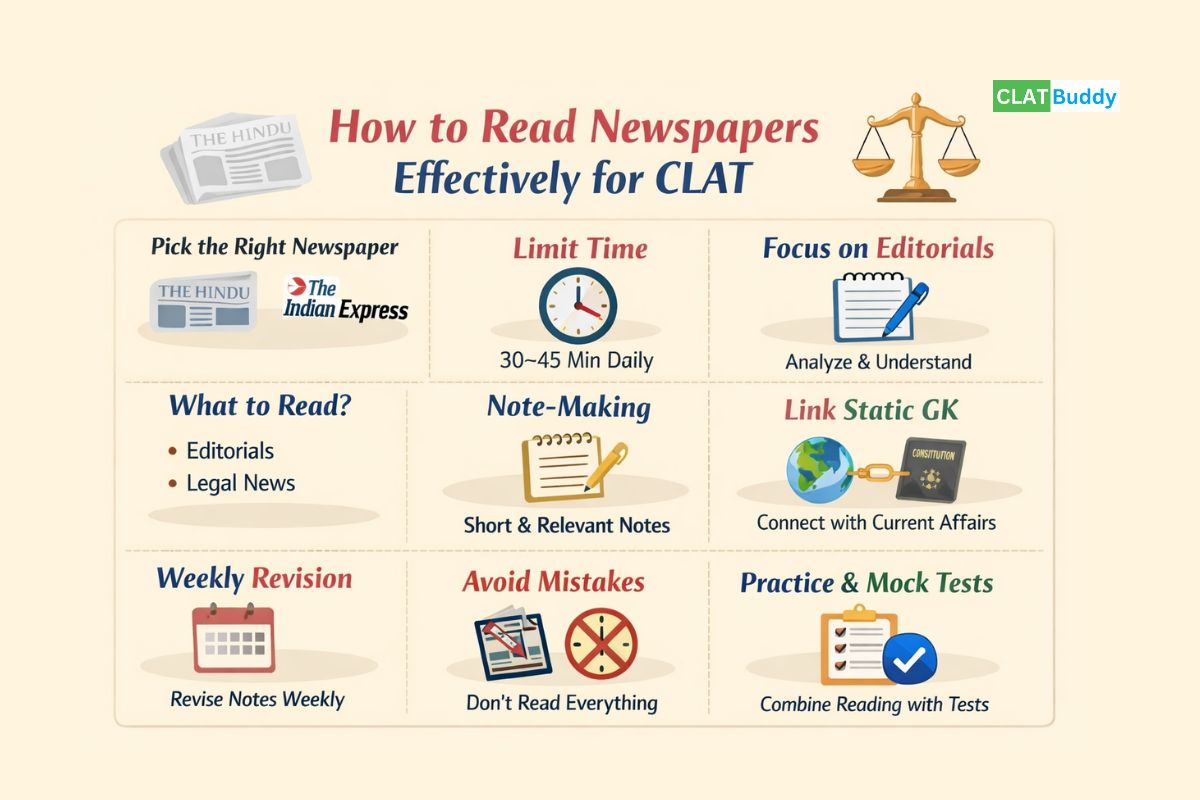
Choosing the right newspaper is your first step. You do not need to read multiple sources.
The best options for CLAT preparation in India are:
Both newspapers provide quality editorials, balanced opinions, and strong coverage of legal and policy issues.
Why should you stick to one newspaper?
Reading multiple newspapers often leads to confusion and repetition. Instead, focus on one source and build consistency. CLAT does not reward volume. It rewards clarity of understanding.
Many students think newspapers are only for current affairs. That is not true.
Newspaper reading helps in multiple sections of CLAT:
Editorials train you to understand arguments, principles, and application of law.
Reading improves comprehension speed, vocabulary, and tone detection.
You build context around events instead of memorising random facts.
You learn how to analyse issues from different perspectives.
This is why newspaper reading is one of the most powerful tools for CLAT preparation.
It is important to understand that not everything in the newspaper is useful. Smart selection is key.
The goal is to filter content based on relevance to CLAT.
This is where most students go wrong. Reading is not enough. You must read actively.
When you pick an editorial, ask yourself the following questions:
CLAT passages are often similar to editorials. So if you master editorials, you are indirectly preparing for the exam itself.
Many students either overdo it or avoid it completely.
The ideal time is:
If you are a beginner, you can take up to 60 minutes initially. But gradually reduce the time as your reading speed improves.
Spending 2 to 3 hours on newspapers is not productive. CLAT preparation requires balance between reading, practice, and revision.
Consistency matters more than duration.
Note-making is what converts reading into retention. But most students make the mistake of writing too much.
Topic: Data Privacy Bill
Avoid copying entire paragraphs. Notes are meant for quick revision, not rewriting the newspaper.
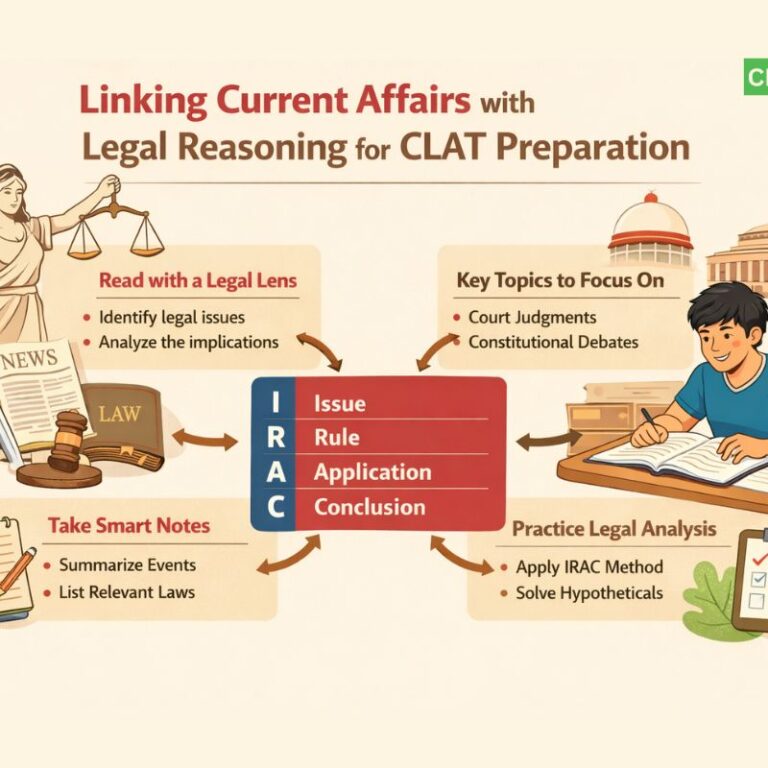
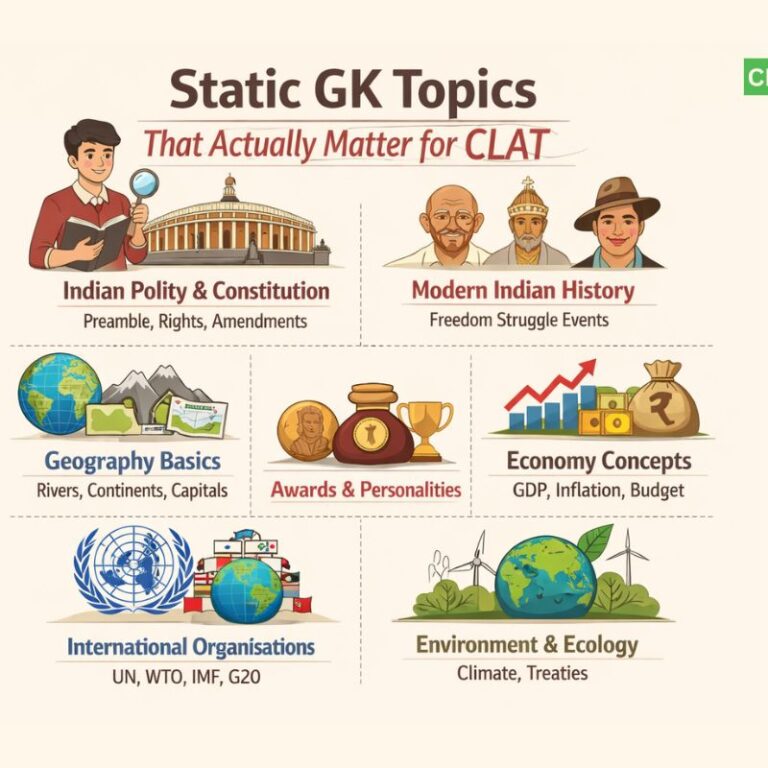
CLAT often tests the connection between current events and static concepts.
For example:
CLAT questions are not direct. They test understanding. Linking current affairs with static GK helps you answer analytical questions easily.
Having a fixed routine can make your preparation smooth and stress-free.
This entire process should take around 30 to 45 minutes.
Revision is what turns information into long-term memory.
Avoiding these mistakes can save you months of ineffective preparation.
Not all news is relevant. Focus on quality, not quantity.
Long notes are difficult to revise and often ignored later.
Editorials are the most important part of CLAT preparation.
CLAT is not a fact-based exam. It is an application-based exam.
Without revision, even the best notes are useless.
If newspaper reading feels difficult right now, that is completely normal.
Gradually, your reading speed and comprehension will improve.
Within a few weeks, what feels difficult today will become your strength.
Newspaper reading is powerful, but it is not enough on its own.
It should be combined with:
Think of newspaper reading as your foundation. Practice is what builds your final performance.
Newspaper reading is not a burden. It is an opportunity to build skills that go beyond CLAT.
Instead of treating it as a daily task, treat it as a habit that improves:
The goal is not to remember every news article. The goal is to become a better reader and thinker.
If done correctly, newspaper reading can become one of the most rewarding parts of your CLAT journey.