
Preparing for CLAT 2027 is not just about how many hours you study, but how well your mind and body support those hours. Many aspirants start with motivation but feel exhausted, distracted, or burned out within a few weeks. If you are aiming to study 6 to 8 hours daily without feeling drained, you need a smart, sustainable approach rather than forcing yourself to sit for long hours.
This guide will help you understand how to build study stamina, stay focused, and prepare consistently for CLAT without fatigue, especially when you are balancing school, coaching, and self study.
Before fixing fatigue, you need to understand why it happens. Feeling tired is not a weakness. It is often a result of wrong study methods.
Most students feel exhausted because they try to study continuously without breaks, use the same subject for hours, or study passively by just reading notes. Your brain is not designed for nonstop focus. It needs variation, rest, and active engagement.
Another major reason is mental pressure. When you constantly think about ranks, cutoffs, and competition, your brain gets stressed even before studying starts. This stress quickly turns into fatigue.
There is no fixed number that works for everyone. However, for CLAT 2027, 6 to 8 focused hours per day is more than enough if done correctly.
Quality matters more than quantity. Four highly focused hours can be more effective than eight distracted hours. Your goal should be productive study time, not just sitting with books.
You should slowly build up to 6 or 8 hours. Jumping directly from 3 hours to 8 hours will exhaust you within days.
Building study stamina is similar to building physical stamina. It happens gradually.
Start by fixing a realistic daily target. If you are currently studying 3 to 4 hours, increase it by 30 to 45 minutes every week. Let your brain adapt to the new routine.
Consistency is key. Studying 5 hours daily for months is better than studying 10 hours for one week and then quitting.
Also, ensure that your study hours are spread across the day instead of being cramped into one long sitting.
The way you divide your time decides how tired you feel.
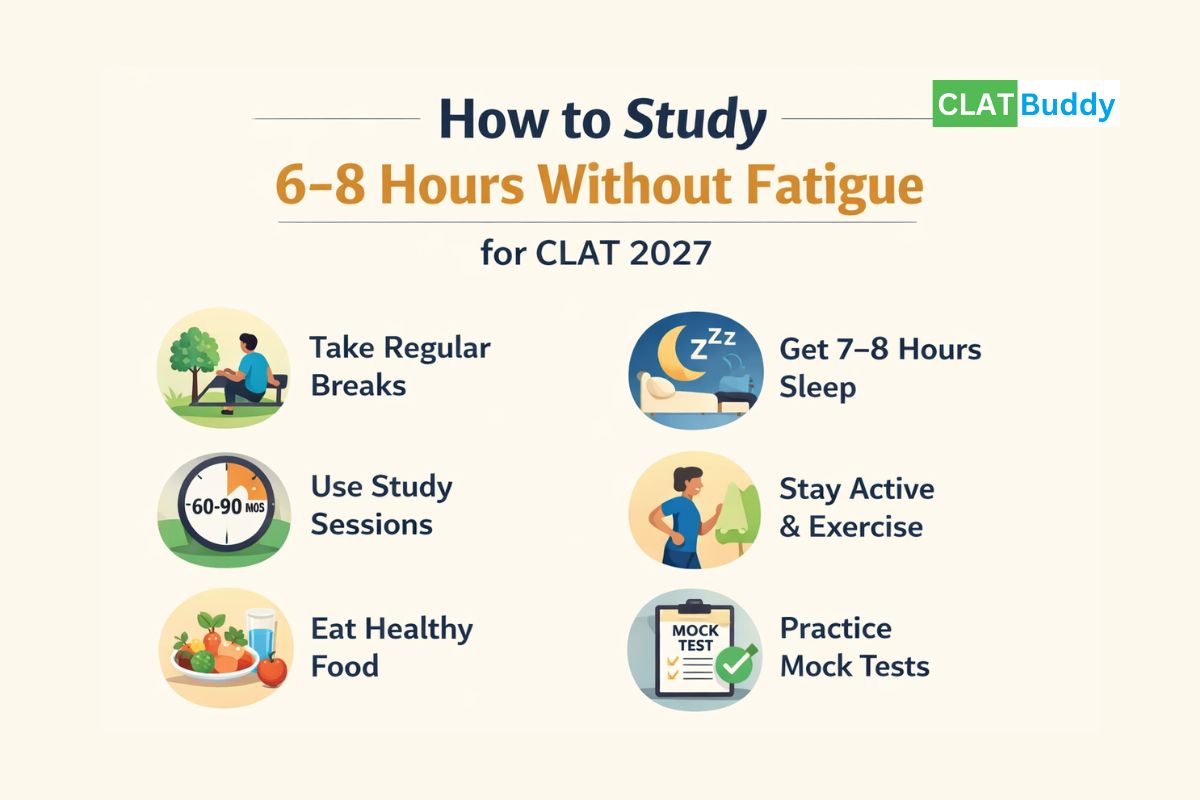
Instead of one long session, break your day into multiple focused blocks. Each block should ideally be 60 to 90 minutes long.
After each block, take a short break of 10 to 15 minutes. Use this break to relax your eyes, stretch, or walk around. Avoid using your phone excessively during breaks as it tires your brain further.
A balanced study day could look like this:
This variation keeps your mind active and reduces monotony.
Your brain is sharpest when you are well rested. You should use this time for subjects that need more thinking.
Legal Reasoning, Logical Reasoning, and Quantitative Techniques should ideally be studied when your concentration levels are high.
Subjects like English reading, vocabulary, and current affairs revision can be done when you feel slightly tired. These subjects are less demanding but still productive.
Avoid studying the same subject for more than 2 hours in a day. Repetition leads to boredom and faster fatigue.
Passive studying is one of the biggest reasons for fatigue. Simply reading notes or watching videos for hours makes your brain sleepy.
Active studying keeps your mind alert. This includes:
When your brain is actively involved, you feel less tired even after long study sessions.
Breaks are not a waste of time. They are necessary for long term focus.
Short breaks help your brain reset. Without breaks, your efficiency drops even if you continue sitting.
During breaks, do something that relaxes you but does not overstimulate your brain. Stretching, light walking, or deep breathing works well.
Avoid scrolling on social media during every break. It overloads your brain with information and makes it harder to concentrate when you return to studying.
Sleep is non negotiable if you want to study 6 to 8 hours daily.
Lack of sleep reduces memory, concentration, and decision making. Even if you sit for long hours, your productivity will be very low.
You should aim for 7 to 8 hours of quality sleep daily. Studying late nights regularly may look dedicated, but it leads to faster burnout.
A well rested brain learns faster and remembers longer.
What you eat directly impacts your energy levels.
Skipping meals or eating too much junk food causes energy crashes. These crashes make you feel sleepy and irritated while studying.
Try to eat balanced meals with fruits, vegetables, proteins, and enough water. Stay hydrated throughout the day, as dehydration often feels like mental fatigue.
Avoid excessive caffeine. Too much tea or coffee increases anxiety and disrupts sleep.
Mental pressure is a silent energy drainer.
Constantly comparing yourself with others, checking ranks, or worrying about results increases stress and fatigue.
Focus on your daily effort instead of outcomes. Ask yourself whether you studied sincerely today rather than how others are performing.
Remember that CLAT is a marathon, not a sprint. Sustainable preparation always beats extreme short term effort.
Mocks are important, but overdoing them can exhaust you.
Quality mock analysis matters more than the number of mocks attempted. One mock with proper analysis can teach you more than three mocks taken blindly.
Schedule mocks on fixed days and keep the next study session lighter. This helps your brain recover.
Do not take mocks when you are already mentally exhausted. It reduces confidence instead of improving performance.
Motivation will not be high every day. Discipline matters more.
Create a routine that fits your school and personal life. A routine reduces decision fatigue and makes studying automatic.
Track small wins like completing a topic or improving mock scores. These small achievements keep you motivated.
Also remind yourself why you started preparing for CLAT. Keeping your long term goal in mind helps you push through low energy days.
Some common mistakes increase fatigue unnecessarily:
Avoid these mistakes to make your preparation smoother and healthier.
Sustainability is the real goal.
Instead of extreme schedules, focus on balance. Studying daily with discipline, taking care of your health, and keeping stress under control will help you prepare confidently.
You do not need to suffer to succeed in CLAT. Smart planning, consistency, and self care will allow you to study long hours without fatigue and perform at your best in CLAT 2027.
If you build the right habits now, your preparation journey will feel manageable, focused, and rewarding.