
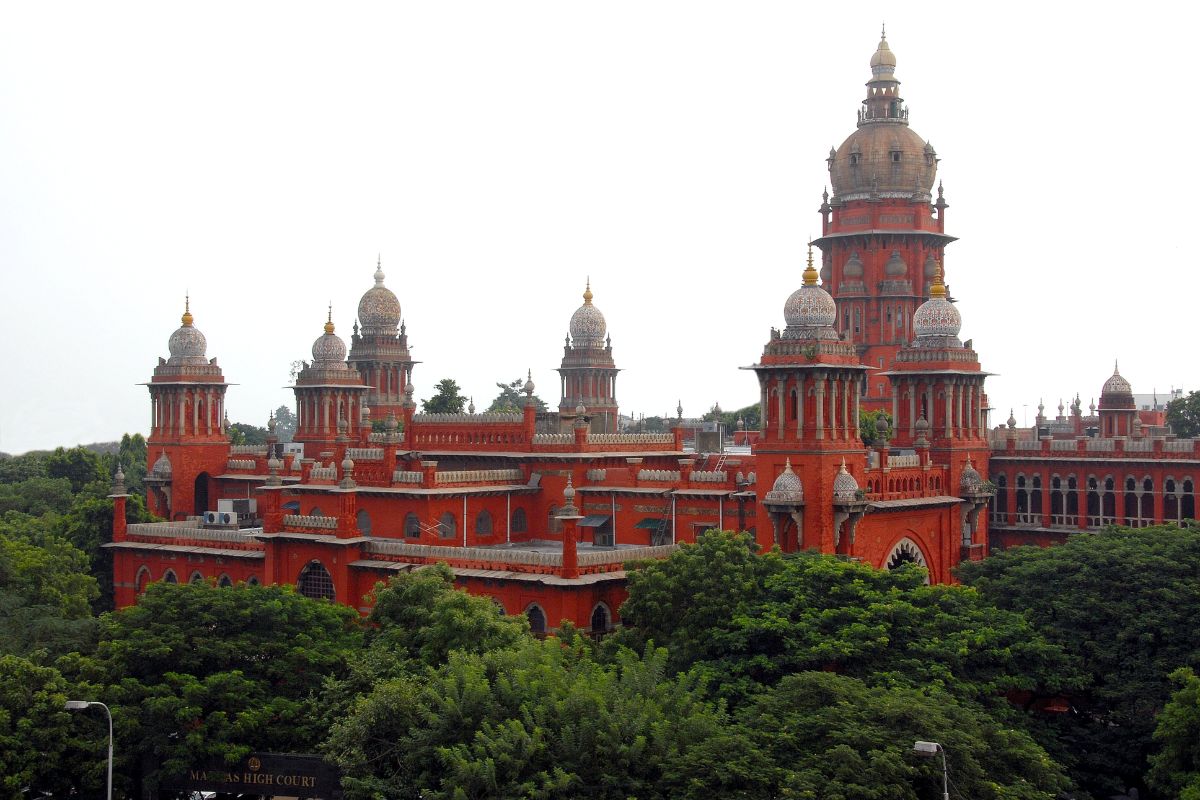
In a strong and important order, the Madras High Court has sharply criticised the Tamil Nadu Government for misusing preventive detention laws to keep people in jail without proper justification. The court made it clear that such laws cannot be used casually, mechanically, or to silence criticism and dissent.
Preventive detention laws allow the government to detain a person without a regular criminal trial, if it believes that the person may disturb public order in the future. In Tamil Nadu, this power is exercised mainly under the Goondas Act, which is meant to deal with habitual offenders whose actions seriously affect society at large.
However, these laws are considered “draconian” because they take away a person’s liberty without following the usual safeguards of criminal law.
The court strongly reaffirmed that personal liberty is a fundamental right and the State has a constitutional duty to protect it. It warned that illegal detention cannot be allowed to continue “even for an hour”.
In this case, the court granted interim bail to a YouTube investigative journalist, Varaki, who had been detained as a “sexual offender” under preventive detention law. The judges found that there were no sufficient grounds to invoke the Goondas Act against him.
The court also directed the Home Secretary to initiate departmental action against police and officials who misuse preventive detention laws for extraneous or improper reasons. If required, criminal prosecution of such officials was also permitted.
One of the most important clarifications made by the court relates to the difference between law and order and public order.
The court reiterated settled Supreme Court principles that:
Mere fear or apprehension of future problems is not enough. Authorities must clearly explain how the alleged conduct threatens public order, not just rely on the seriousness of the accusation.
The judges also expressed concern over how habeas corpus petitions, which are meant to protect personal liberty, often become ineffective. The State frequently seeks repeated adjournments, resulting in cases being heard only when detention periods are about to end. This defeats the very purpose of constitutional remedies and allows illegal detention to continue unchecked.
According to the court, this has become a systemic problem in Tamil Nadu, with hundreds of preventive detention cases clogging the courts.
Finally, the court warned against using preventive detention against journalists and social media commentators. Filing multiple criminal cases and invoking preventive detention laws against such individuals directly violates freedom of speech under Article 19(1)(a) of the Constitution.