
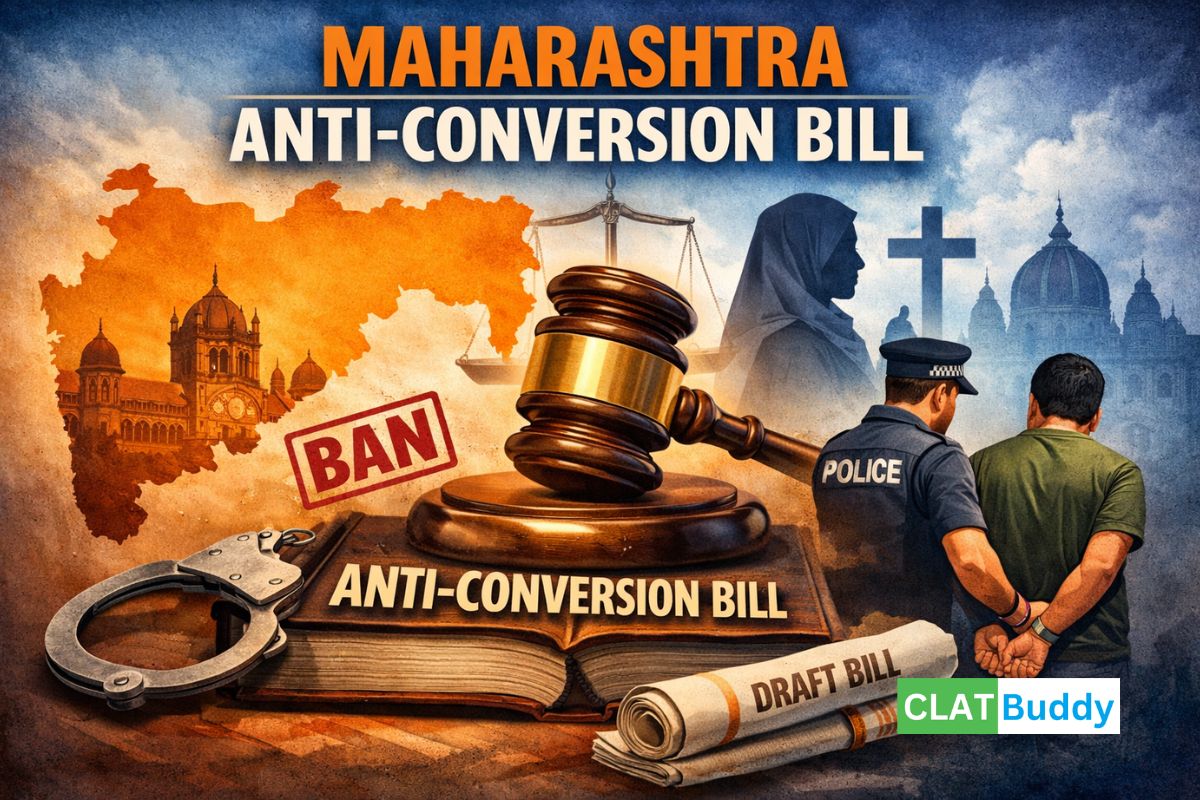
The Maharashtra Cabinet on Thursday approved the draft of a proposed anti-conversion law titled the Maharashtra Freedom of Religion Act, 2026, paving the way for its introduction in the State Legislature during the ongoing Budget Session. The proposed legislation aims to prohibit religious conversions carried out through force, fraud or inducement while maintaining the constitutional protection of religious freedom.
The decision was taken during a Cabinet meeting of the Mahayuti government. After the Bill is presented in the Legislature and passed, the State government is expected to issue a formal Government Resolution to bring the law into effect.
Minister Nitesh Rane confirmed that the State government has decided to introduce the anti-conversion Bill during the current Budget Session of the Maharashtra Legislature.
According to Rane, the proposed law provides stringent legal consequences for individuals involved in unlawful religious conversions.
“If a person carries out religious conversion through force, fraud or allurements, a non-bailable offence will be registered,” Rane said.
He further stated that the law would empower authorities to arrest individuals accused of such offences and that bail would not be easily granted in such cases. Detailed provisions of the legislation are expected to be made public once the Bill is tabled in the Legislature.
The Maharashtra government has indicated that the proposed law would impose stricter penalties than similar anti-conversion laws currently in force in states such as Madhya Pradesh and Gujarat.
Government representatives have claimed that the legislation is designed to create a stronger legal framework to address coercive religious conversions and ensure accountability for those involved in unlawful practices.
Officials stated that the law would penalise individuals or organisations found responsible for facilitating conversions through fraudulent or coercive means. The Bill also proposes provisions for cancellation of registrations of organisations involved in such activities.
Repeat offenders are likely to face harsher punishment than first-time offenders. The final determination of penalties and procedural details will be carried out by the State Home Department.
According to government sources, the Bill seeks to strike a balance between preventing coercive religious conversions and protecting the constitutional guarantee of freedom of religion.
The Constitution of India recognises the fundamental right to freedom of religion, which includes the right to freely practise, profess and propagate one’s religion.
However, the State government has argued that instances of alleged unauthorised religious conversions have been reported in Maharashtra in recent years.
Government sources stated that such cases may involve pressure on vulnerable individuals through various means, including:
Authorities believe that these practices may undermine individual autonomy and dignity if they occur through coercion or deception.
The proposed legislation therefore seeks to prohibit conversions obtained through unlawful means while safeguarding genuine voluntary religious choices.
The Maharashtra government began work on the proposed law following representations from elected representatives, organisations and members of the public who called for legislative measures to address alleged forced religious conversions.
In response, the State government constituted a special committee under the chairmanship of the Director General of Police (DGP), Maharashtra, through a Government Resolution dated February 14, 2025.
The committee was tasked with:
After conducting its review, the committee prepared a draft of the Maharashtra Freedom of Religion Act, 2026.
According to officials, the Director General of Police submitted the draft Bill to the State government on February 26, 2026.
The Cabinet’s approval on March 5 marks the next step toward introducing the legislation before the State Legislature.
Several states in India have enacted laws regulating religious conversions carried out through coercive or fraudulent means. These laws are commonly referred to as “Freedom of Religion” laws.
States such as Madhya Pradesh, Uttar Pradesh, Gujarat, Himachal Pradesh and Uttarakhand have introduced similar legislation in recent years.
The Maharashtra Bill is said to be broadly aligned with these laws, though government representatives claim it will contain stricter enforcement provisions.
During the announcement, Minister Nitesh Rane also commented on a recent decision of the Bombay High Court concerning the offering of Namaz in public spaces.
Rane welcomed the court’s observations and stated that the availability of mosques and designated prayer areas across the state makes it unnecessary for prayers to be conducted on roads or at airports.
He emphasised that public order and traffic movement must be considered when religious activities take place in public spaces.
The proposed Maharashtra Freedom of Religion Act, 2026 will now be introduced for discussion and debate in the Maharashtra Legislature during the Budget Session.
If passed, the law would establish a statutory framework for regulating religious conversions carried out through coercive or fraudulent means in the state.
Further details of the Bill, including the exact penalties, procedural safeguards and enforcement mechanisms, are expected to be released once the legislation is formally tabled in the Assembly.