
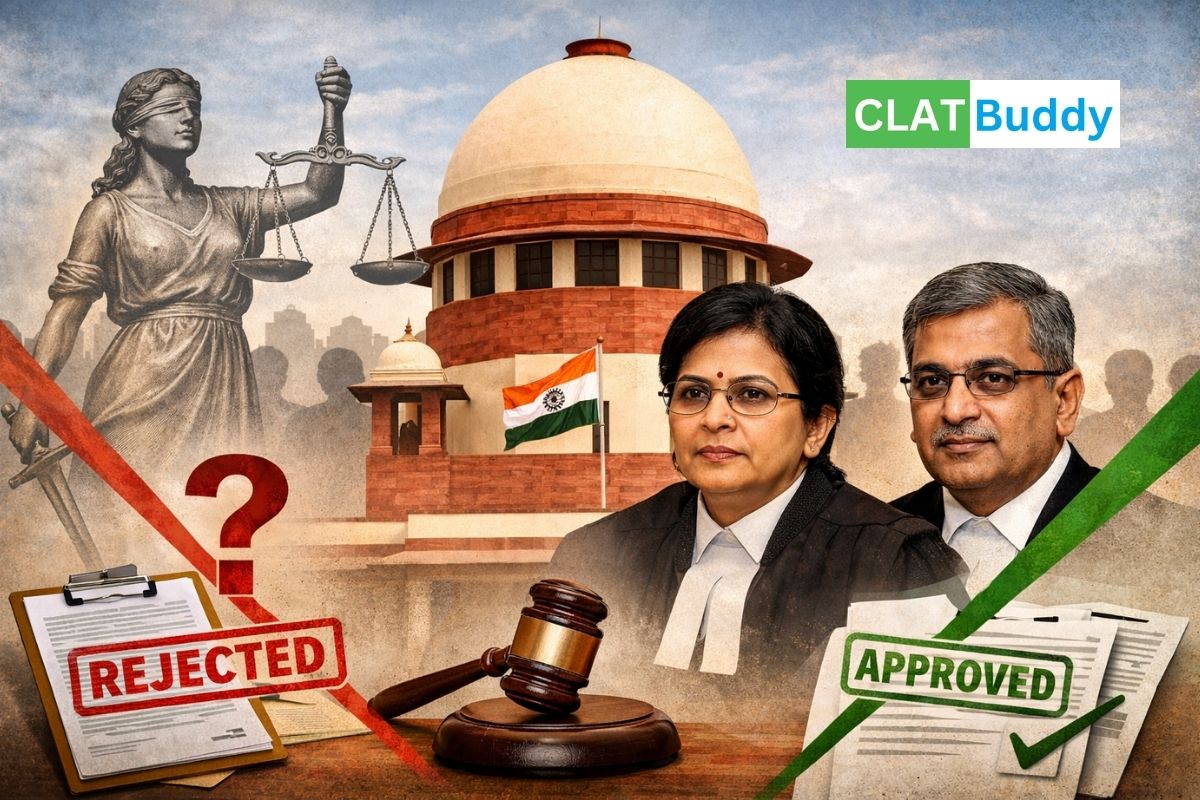
The Supreme Court recently delivered a split verdict on the constitutional validity of Section 17A of the Prevention of Corruption Act, 1988. This provision requires investigating agencies to obtain prior approval before conducting any enquiry or investigation against public servants for actions taken while performing official duties. Because the two judges on the Bench disagreed, the matter has now been referred to the Chief Justice of India for consideration by a larger Bench.
Section 17A was inserted into the Prevention of Corruption Act through an amendment in 2018. The provision mandates that no police officer shall conduct any enquiry, inquiry, or investigation into an offence allegedly committed by a public servant while discharging official functions without prior approval from the competent authority.
The stated objective behind this provision was to protect public servants from frivolous or vexatious complaints and to ensure that honest officials can take decisions without fear of prosecution. However, critics argue that it places serious obstacles in the path of anti-corruption investigations.
The constitutional validity of Section 17A was challenged by the Centre for Public Interest Litigation (CPIL). The petitioner argued that requiring prior approval even at the preliminary stage shields corrupt officials and undermines the purpose of the Prevention of Corruption Act, which is to detect, investigate, and punish corruption in public life.
The challenge raised concerns about whether the provision violates Article 14 of the Constitution by creating an unreasonable classification and whether it weakens accountability mechanisms under anti-graft laws.
Justice B V Nagarathna held that Section 17A is unconstitutional. She observed that the requirement of prior approval acts as a barrier to initiating even a preliminary enquiry, thereby allowing allegations of corruption to remain unexamined.
According to her, if approval is denied at the threshold, the genuineness of the complaint can never be tested. She further stated that the provision could embolden public servants to take mala fide decisions, knowing that investigation cannot begin without prior sanction.
Justice Nagarathna also held that the protection offered under Section 17A is effectively limited to higher officials who take decisions or make recommendations, creating an unreasonable classification. In her view, this violates Article 14 as the classification has no rational nexus with the object of preventing corruption.
Justice K V Viswanathan took a contrary view and upheld the constitutional validity of Section 17A. He held that the provision does not aim to protect corrupt conduct but seeks to safeguard honest public servants from baseless complaints that may otherwise paralyse decision-making.
However, Justice Viswanathan acknowledged that the law lacks an explicit independent screening mechanism. To address this, he suggested that the Lokpal or Lokayukta should examine complaints and recommend whether approval should be granted or refused, depending on whether the complaint is frivolous or merits enquiry.
Since the two judges reached different conclusions, the Supreme Court has directed that the matter be placed before the Chief Justice of India. A larger Bench will now decide the constitutional validity of Section 17A.
The final outcome will have a lasting impact on how corruption complaints against public servants are investigated and on the balance between administrative protection and public accountability.