
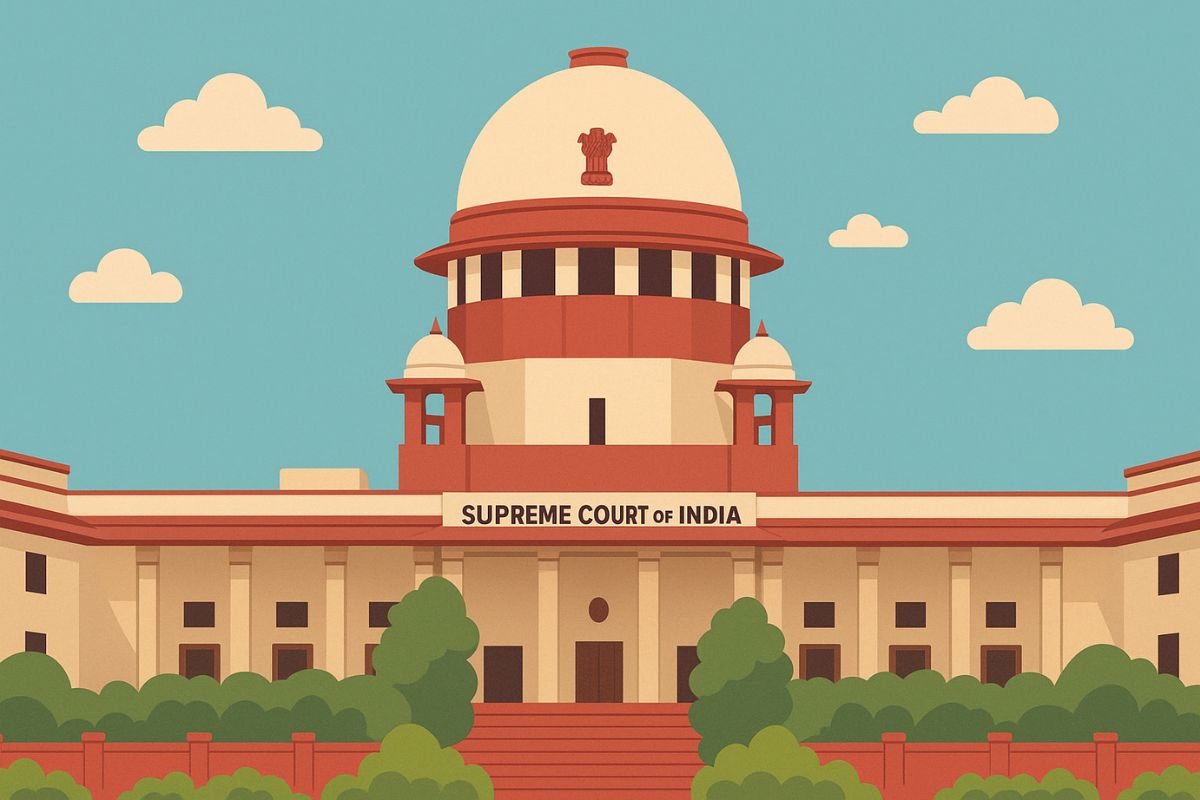
The Supreme Court of India held a special hearing on 11 October 2026 over restrictions imposed in Delhi during protests linked to concerns surrounding the Election Commission and electoral-roll revisions.
The Court examined allegations that authorities had imposed excessive restrictions on public movement, including disruptions to Metro and railway services, internet access and preventive detentions. It also considered whether earlier judicial directions had been violated.
During the hearing, the Supreme Court stressed that peaceful protesters cannot be unlawfully detained and that restrictions imposed in the name of maintaining law and order must remain proportionate. The Court also emphasised that public transport and essential services should not be completely disrupted unless such action is legally justified.
A major issue before the Court was whether the authorities had complied with its earlier directions concerning transport restrictions. The Court indicated that a prima facie case of contempt appeared to arise over alleged non-compliance and sought responses from senior officials.
The matter is important because it brings together several constitutional principles concerning civil liberties and state power.
This development is highly relevant for CLAT current affairs because it connects directly with important constitutional provisions and doctrines:
Continue your CLAT preparation with 3,000+ practice questions, question banks and exam-focused learning resources.
Explore Practice Resources →The case is particularly significant for understanding how courts balance public order and security concerns against fundamental freedoms. It also shows the judiciary’s role in reviewing executive action where restrictions on movement, protest and personal liberty are challenged.
Explore structured courses, question banks, notes and preparation resources designed for CLAT aspirants.
Explore CLATBuddy →