
Preparing for CLAT takes effort, time, and emotional energy. When results do not match expectations, it can feel confusing and heavy. If you are facing this moment, pause for a second. One exam result does not decide your intelligence, your future, or your worth. What matters now is how you understand your options and plan your next move calmly.
This guide is written to help you think clearly, without panic, and choose a path that actually works for you.
No. Not cracking CLAT does not mean your legal career is over.
CLAT is a highly competitive exam with limited seats and a large number of aspirants. Many capable students miss out due to factors like time pressure, exam anxiety, or one weak section. Law as a profession is much bigger than just NLUs.
Success in law depends on skills, internships, consistency, and exposure over time, not only on the college name.
Before making any decision, it is important to slow down and reflect.
Feeling disappointed or upset is natural. Give yourself a few days before jumping into decisions. Avoid constant comparison with friends or social media posts.
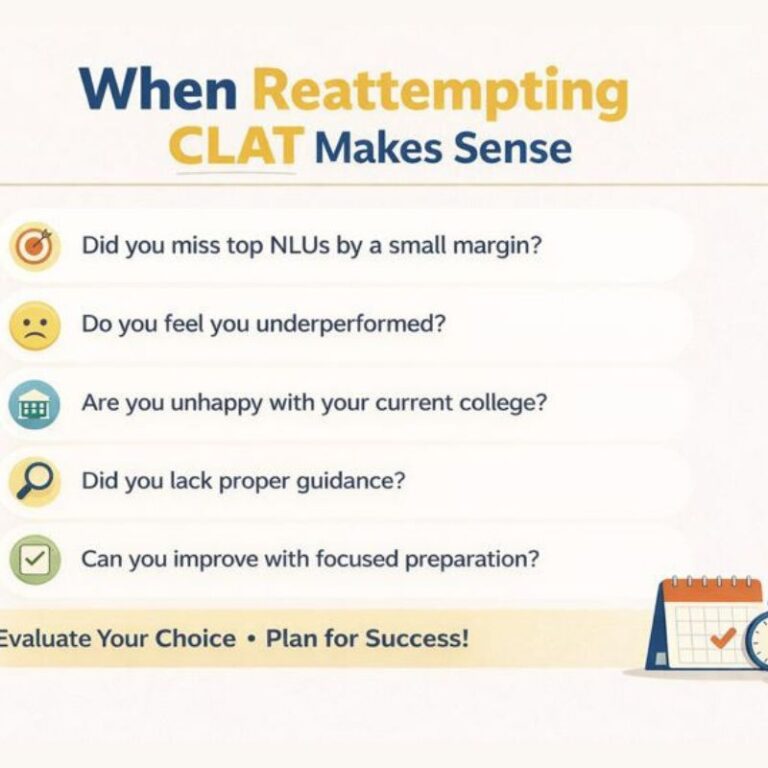
Ask yourself:
This analysis will help you decide whether a second attempt makes sense or whether another option suits you better.
Taking a drop year is a serious decision and should be made with clarity, not fear.
A drop year only works when it is strategic and structured.
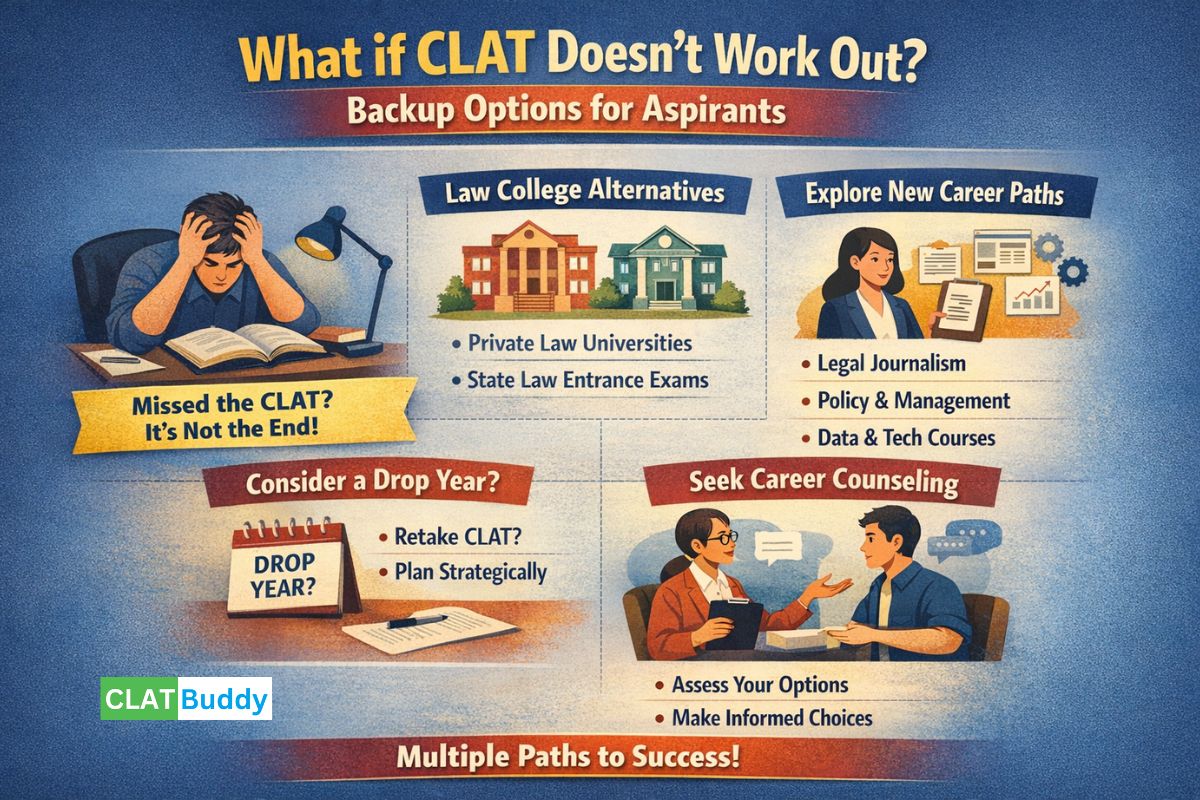
If you want to study law but CLAT did not go as planned, several solid options exist.
Many private law universities in India offer structured five year law programs, experienced faculty, and good exposure if you use the opportunities well.
Before choosing a private law college, look at:
The college gives you the platform. What you build on it depends on you.
Yes. State law universities are often underrated but can offer strong legal education at a lower cost.
Many state universities admit students through their own entrance exams or merit based admissions. These colleges are especially useful if you are interested in litigation, judiciary preparation, or regional practice.
Yes, law is flexible in this sense.
You can pursue a three year LLB after completing graduation in any subject. This option is useful if:
Many respected lawyers and judges have come through the three year LLB route.
It is completely fine to feel uncertain. CLAT preparation often pushes students into law very early, sometimes before clarity develops.
If law still interests you but not in the traditional sense, you can explore:
Changing direction is not failure. You can consider:
Choosing what fits you matters more than sticking to a plan that no longer feels right.
In the long run, skills matter more.
Your ability to research, write, argue, communicate, and work consistently matters far more than the brand name on your degree. Students from non-NLU colleges regularly build strong careers by focusing on:
Five focused years can outweigh one exam result.
If you join a private or state law college, your approach becomes even more important.
Focus on:
Law rewards effort over time. Consistency always shows results.
Family pressure can make this phase more stressful. The best way to deal with it is clarity.
Explain:
When you show a clear plan, conversations become easier and more supportive.
Ask yourself honestly:
Your answers should guide your decision, not fear or comparison.
CLAT is an important exam, but it is not life itself. At 16 to 18 years of age, your journey is just beginning. What matters most is your ability to adapt, learn, and keep moving forward with clarity.
One exam cannot decide your future. Your choices after the exam do.