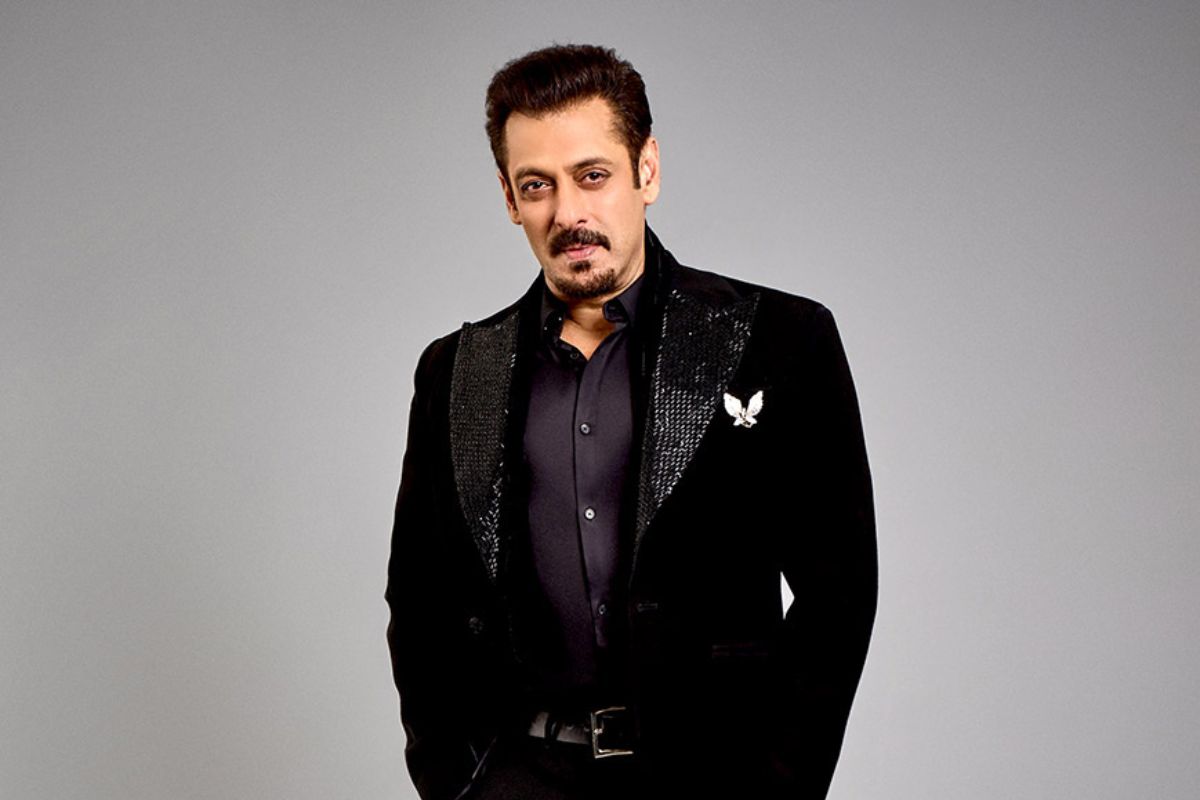
The Delhi High Court is examining a dispute that highlights growing legal concerns around personality rights and the misuse of artificial intelligence tools. The case involves Bollywood actor Salman Khan and a China-based AI voice generation platform that has challenged an interim injunction granted in the actor’s favour to protect his personality rights.
The matter has drawn attention because it sits at the intersection of privacy, technology, commercial exploitation, and cross-border digital regulation.
Salman Khan approached the Delhi High Court alleging unauthorised use of his name, voice, image, and likeness across various digital platforms. The actor argued that such use amounted to commercial exploitation of his identity and posed a risk of impersonation and misinformation, particularly through AI-generated content.
Taking note of these concerns, the Court passed an interim injunction restraining multiple entities from using his personality traits without authorisation. In January 2026, however, a China-based AI voice generation platform filed an application seeking to vacate this interim protection. The High Court issued notice on this application on January 21, 2026.
While procedural hearings in the main suit were conducted by the Joint Registrar (Judicial) on January 23, the application filed by the Chinese platform is listed for further consideration on February 27.
The original suit named 28 defendants, reflecting the scale of alleged misuse. These include global technology companies such as Apple Inc., Google LLC, Meta platforms like Facebook and Instagram, X, and large e-commerce platforms such as Amazon India and Flipkart. Messaging intermediaries including Telegram were also included.
In addition to identified entities, the actor sought protection against unknown individuals who may be misusing his identity online. These unidentified parties were impleaded as Defendant No. 1 under the name “John Doe” or “Ashok Kumar”, a procedural mechanism that allows courts to pass ex parte orders where the identity of wrongdoers is not immediately known.
The Chinese AI platform was subsequently added as Defendant No. 35. However, it has not yet been formally impleaded following directions issued by the Joint Registrar (Judicial).
Personality rights refer to an individual’s right to control the commercial use of their identity, including name, image, voice, likeness, and other personal attributes. For public figures, these attributes carry significant economic and reputational value.
In India, personality rights are not governed by a dedicated statute. Courts have derived protection from Article 21 of the Constitution, which guarantees the right to life and personal liberty. In K.S. Puttaswamy v. Union of India (2017), the Supreme Court recognised the right to privacy as a fundamental right. Subsequent judicial decisions have extended this reasoning to restrain unauthorised commercial exploitation of identity.
Courts have consistently held that misuse of a person’s persona, particularly for profit or misleading purposes, can amount to an infringement of the right to life and dignity.
Indian courts have increasingly intervened to restrain impersonation and unauthorised use of celebrity identities. In a 2025 order involving actor Aishwarya Rai Bachchan, the Delhi High Court observed that unauthorised use of a celebrity’s name or likeness could cause serious commercial harm.
Courts have passed injunctions against fake endorsements, manipulated images, misleading websites, and AI-generated content that imitates a public figure. The judiciary has recognised that such misuse can mislead the public and dilute the commercial value associated with a celebrity’s identity.
At the same time, courts have protected artistic expression, including parody and satire, provided such works do not falsely suggest endorsement or mislead audiences.
Article 19(1)(g) of the Constitution guarantees Indian citizens the right to carry on trade or business. Digital platforms often rely on this provision when defending content creation and distribution.
However, this right is subject to reasonable restrictions. Courts have clarified that commercial freedom cannot override an individual’s right to privacy and dignity. Importantly, foreign entities cannot invoke Article 19 rights before Indian courts, which becomes relevant in disputes involving overseas platforms.
The involvement of a China-based AI platform brings additional regulatory considerations. In 2020, the Union government banned more than 200 Chinese applications under Section 69A of the Information Technology Act, citing concerns over data security and national sovereignty.
Although the Digital Personal Data Protection Act, 2023, has been enacted, its enforcement mechanisms are still evolving. This has left regulatory gaps, particularly in relation to AI tools capable of voice cloning and synthetic media generation.
Policy experts have pointed out that voice-based AI could significantly improve digital access and inclusion. However, without effective safeguards, such technology can also be misused for impersonation, fraud, and reputational damage. The Court’s decision on the Chinese platform’s application could therefore have wider implications for AI companies operating in India.
Personality rights suits are typically filed under the Commercial Courts Act, 2015, as they involve commercial exploitation of identity rather than traditional intellectual property rights.
In several celebrity cases, courts have granted interim injunctions without insisting on immediate payment of court fees, allowing plaintiffs time to comply with procedural requirements. This practice has attracted scrutiny, particularly where high brand valuations are cited to justify jurisdiction and relief.
Similar regulatory concerns have emerged internationally, including in the European Union, where generative AI systems are under increasing legal examination.