
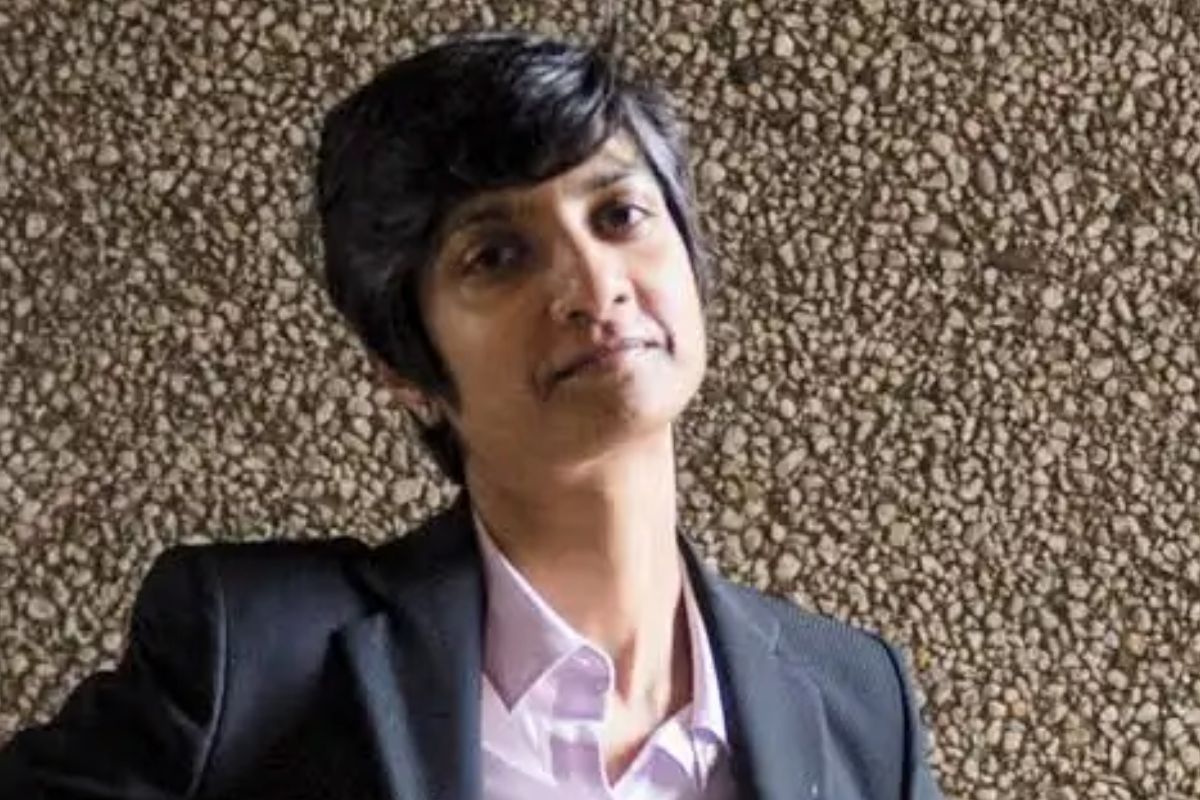
India witnessed a historic moment on April 6, 2026, when Menaka Guruswamy took oath as a Member of Parliament in the Rajya Sabha. With this, she became the first openly queer person to enter India’s Parliament—marking a significant step for LGBTQ+ representation in the country’s political landscape.
| Aspect | Details |
|---|---|
| Name | Menaka Guruswamy |
| Age | 51 years |
| Birth | 1974, Hyderabad |
| Position | Rajya Sabha MP (2026) |
| Historic Significance | India’s first openly queer Member of Parliament |
| Political Party | All India Trinamool Congress |
| Profession | Senior Advocate, Supreme Court of India |
| Education (India) | National Law School of India University (LLB) |
| Education (International) | University of Oxford (BCL, DPhil), Harvard Law School (LLM) |
| Academic Roles | Taught at Yale, NYU, University of Toronto; Research Scholar at Columbia |
| Major Recognition | Named in Time 100 (2019) |
| Key Case | Navtej Singh Johar v. Union of India |
| Legal Contribution | Argued against Section 377 IPC leading to its decriminalisation |
| Other Work | Right to Education case, human rights cases (Manipur extrajudicial killings) |
| Core Focus (Political) | Equality, dignity, non-discrimination |
| Significance | Greater LGBTQ+ representation in Indian Parliament |
Born in Hyderabad in 1974, Guruswamy has built a formidable reputation as a constitutional lawyer. She studied law at the National Law School of India University before pursuing higher education at University of Oxford and Harvard Law School. A Rhodes Scholar, she later completed a doctorate in law from Oxford.
Her career spans both academia and practice. She has taught at global institutions such as Yale, NYU, and the University of Toronto, and was designated a Senior Advocate in the Supreme Court of India in 2019—an honour reserved for leading legal minds.
Guruswamy is best known for her role in the historic Navtej Singh Johar v. Union of India case. In 2018, she argued against the colonial-era Section 377 IPC, which criminalised same-sex relations.
Her arguments highlighted how the law violated fundamental rights such as dignity, equality, and personal liberty. The Supreme Court ultimately struck down Section 377, a decision that transformed India’s legal and social approach to LGBTQ+ rights.
Apart from this, she has been involved in cases related to the Right to Education Act and human rights issues, including matters concerning extrajudicial killings in Manipur.
Guruswamy was nominated to the Rajya Sabha by the All India Trinamool Congress (TMC). Her entry is being widely seen as a progressive political move, reflecting increasing acceptance of diversity in public institutions.
She has stated that her focus in Parliament will be on equality, fraternity, and non-discrimination—values deeply rooted in constitutional principles.
Guruswamy’s election is considered a watershed moment for LGBTQ+ visibility in India. While openly queer individuals have held positions at local and state levels before, none had entered Parliament until now.
Activists view her presence as symbolically powerful—it places LGBTQ+ voices directly within law-making spaces. At the same time, there is cautious optimism. Representation alone does not guarantee policy change, but it can reshape public discourse and influence future legal reforms.
India’s journey on LGBTQ+ rights has been gradual—from criminalisation under Section 377 to its decriminalisation in 2018. Guruswamy, who played a key role in that legal shift, now enters the legislative arena.
Her transition from courtroom advocacy to parliamentary participation represents more than personal achievement—it signals a broader shift towards inclusion in India’s democratic framework.