


What is Hantavirus?
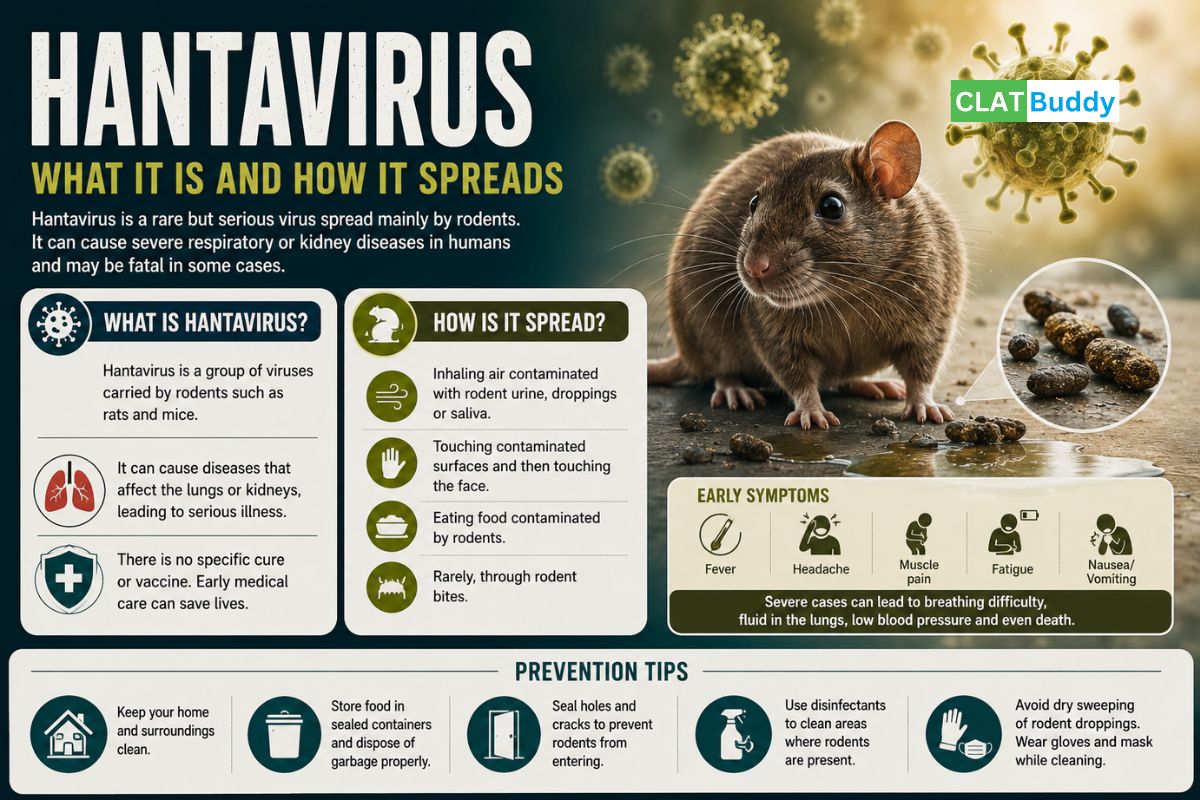
Hantavirus is a rare but serious virus that spreads mainly through rodents such as rats and mice. Humans can become infected after coming into contact with the urine, saliva, or droppings of infected rodents. The virus is considered dangerous because it can severely affect the lungs and kidneys, and in some cases, it may become life-threatening.
Although hantavirus infections are uncommon, health experts take them seriously due to the rapid worsening of symptoms in severe cases.
How Does Hantavirus Spread?
Hantavirus mainly spreads through infected rodents and contaminated surroundings. The virus does not usually spread easily from person to person.
Common ways through which infection may occur include:
- Breathing air contaminated with rodent urine or droppings
- Touching contaminated surfaces and then touching the face
- Eating food contaminated by rodents
- Getting bitten by an infected rodent in rare cases
People living or working in areas with heavy rodent presence are generally at higher risk.
Symptoms of Hantavirus
The early symptoms of hantavirus often look similar to flu, which makes the illness difficult to identify in the beginning.
Early Symptoms
- Fever
- Body pain
- Headache
- Fatigue
- Chills
- Nausea or vomiting
Severe Symptoms
After a few days, some patients may develop:
- Breathing difficulty
- Chest tightness
- Severe cough
- Fluid buildup in the lungs
- Low blood pressure
In severe cases, emergency medical care becomes necessary.
How is Hantavirus Treated?
There is currently no specific medicine or vaccine widely available for hantavirus infection. Treatment mainly focuses on supportive medical care.
Doctors may provide:
- Oxygen support
- Intensive care monitoring
- Fluid management
- Breathing assistance in critical cases
Early diagnosis and hospital treatment can improve recovery chances significantly.
Prevention of Hantavirus
Preventing rodent exposure is the most effective way to avoid hantavirus infection.
Some important preventive measures include:
- Keep homes and storage areas clean
- Store food in sealed containers
- Dispose of garbage properly
- Seal holes and cracks where rodents may enter
- Avoid dry sweeping rodent droppings
- Use gloves and disinfectants while cleaning contaminated areas
Conclusion
Hantavirus is a serious viral infection linked mainly to rodents and contaminated environments. While rare, it can become dangerous if symptoms are ignored. Awareness about hygiene, rodent control, and early medical attention plays an important role in preventing severe complications caused by the virus.
Calling all law aspirants!
Are you exhausted from constantly searching for study materials and question banks? Worry not!
With over 15,000 students already engaged, you definitely don't want to be left out.
Become a member of the most vibrant law aspirants community out there!
It’s FREE! Hurry!
Join our WhatsApp Groups (Click Here) and Telegram Channel (Click Here) today, and receive instant notifications.