


Deepfakes: Explained in a Simple Way
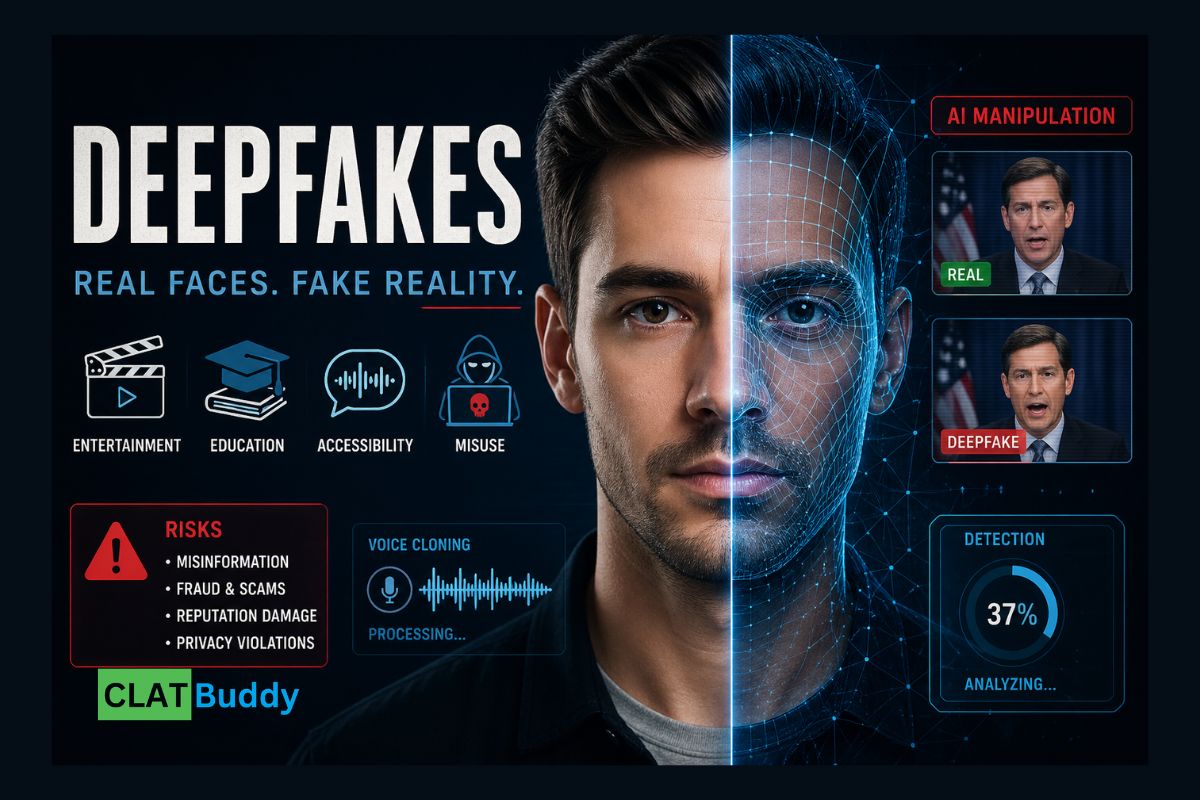
Deepfakes are fake videos, images, or audio clips that look extremely real. They are created using artificial intelligence (AI), which can copy a person’s face, voice, and expressions. As a result, it may appear that someone is saying or doing something—even when they never actually did it.
To understand this better, imagine a video where a famous actor is seen giving a speech they never gave. The face looks real, the voice sounds accurate, and even the expressions match. This is what deepfake technology can do.
How Do Deepfakes Work?
Deepfakes are created using a branch of AI called Machine Learning. Within this, a technique known as Generative Adversarial Networks is commonly used.
In simple terms:
- One AI system creates fake content (like a video).
- Another AI system checks whether it looks real or fake.
- They keep improving until the fake looks almost identical to real content.
Because of this process, deepfakes today are becoming harder to detect.
Where Are Deepfakes Used?
Deepfakes are not always harmful. They are used in several positive ways:
- Movies and entertainment: Actors can be made to look younger or older.
- Education: Historical figures can be recreated for teaching.
- Accessibility: Voice cloning can help people who cannot speak.
However, the problem arises when this technology is misused.
What Are the Risks?
Deepfakes can create serious issues, especially in today’s digital world.
- Misinformation: Fake videos of politicians or public figures can spread false information.
- Reputation damage: Someone’s image or voice can be misused without permission.
- Fraud and scams: Fake audio can be used to trick people into sending money.
- Privacy violations: Individuals may be shown in content they never participated in.
These risks are increasing as deepfake technology becomes more accessible.
Legal Position in India
India does not yet have a specific law only for deepfakes. However, some existing laws can be used to deal with misuse.
For example:
- The Information Technology Act, 2000 deals with online offences like identity theft and cyber fraud.
- The Indian Penal Code covers crimes like defamation, cheating, and obscenity.
Even with these laws, dealing with deepfakes is challenging because the technology is evolving quickly.
Why Should It Matter?
Deepfakes affect trust. When people cannot tell what is real and what is fake, it becomes difficult to rely on digital content. This can impact elections, public opinion, and even personal relationships.
Conclusion
Deepfakes are a powerful example of how advanced technology can be both useful and dangerous. While they bring innovation in fields like entertainment and education, their misuse raises serious concerns. There is a growing need for better laws, improved detection tools, and awareness among users to handle this technology responsibly.
Calling all law aspirants!
Are you exhausted from constantly searching for study materials and question banks? Worry not!
With over 15,000 students already engaged, you definitely don't want to be left out.
Become a member of the most vibrant law aspirants community out there!
It’s FREE! Hurry!
Join our WhatsApp Groups (Click Here) and Telegram Channel (Click Here) today, and receive instant notifications.