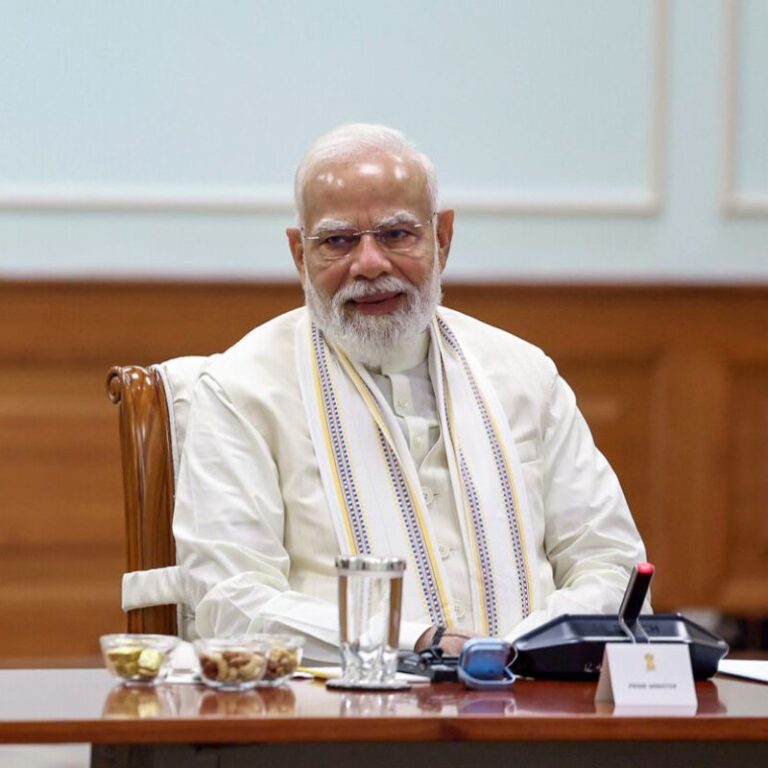


Raghav Chadha’s Shift to BJP: Merger or Defection? Explained

The recent political development involving Raghav Chadha and six other Aam Aadmi Party (AAP) Rajya Sabha MPs joining the Bharatiya Janata Party (BJP) has triggered a serious constitutional debate. While the Rajya Sabha Chairman has approved the “merger,” the larger legal question remains—does this move qualify as a valid defence under India’s anti-defection law?
What Happened?
In April 2026, seven AAP Rajya Sabha MPs, including Chadha, formally joined the BJP. The Chairman of the Rajya Sabha recognised this as a merger under the Tenth Schedule of the Constitution. As a result, these MPs were not immediately disqualified, and the BJP’s strength in the Upper House increased significantly.
Chadha justified his decision by citing internal issues within AAP, including what he described as a “toxic work culture.” However, beyond political reasoning, the move raises a deeper legal issue under the anti-defection framework.
What Does the Anti-Defection Law Say?
The anti-defection law, introduced through the 52nd Constitutional Amendment (1985) and strengthened by the 91st Amendment (2003), aims to prevent political defections and ensure party discipline.
Under Paragraph 2 of the Tenth Schedule, a member can be disqualified if they voluntarily give up party membership or defy the party whip.
However, there is an important exception—merger (Paragraph 4). For a valid merger:
- The original political party must merge with another party, and
- At least two-thirds of the legislators must agree to the merger
The Core Legal Issue
Chadha and the other MPs rely on the second condition—they claim that since two-thirds of AAP’s Rajya Sabha MPs joined BJP, they are protected under the merger exception.
But this argument faces a major legal hurdle.
The first condition is not satisfied. The Aam Aadmi Party as a national political party has not merged with the BJP. Only a group of MPs has switched sides. This raises a fundamental question—can a legislative group act independently of the political party?
Supreme Court’s Position
The answer largely lies in the Supreme Court’s interpretation in the Subhash Desai v. Principal Secretary, Governor of Maharashtra case (2023).
The Court clearly held:
- A political party is distinct from its legislative wing
- The legislative party cannot act independently of the original political party
- Allowing such actions would defeat the purpose of the anti-defection law
The Court emphasised that a legislative majority does not equal the political party itself. This interpretation suggests that MPs alone cannot engineer a valid merger.
Conflicting Judicial Views
Despite the Supreme Court’s stance, there is some legal uncertainty. In certain earlier cases, including decisions of the Bombay High Court in Goa-related political disputes, courts have taken a more flexible view—accepting that a two-thirds legislative majority may be sufficient.
This creates a conflict in interpretation, making the law unsettled.
So, Is the Merger Valid?
From a strict constitutional perspective, Chadha’s defence appears weak. Since AAP as a party has not merged with the BJP, the essential requirement under Paragraph 4 is missing.
However, because the Rajya Sabha Chairman has accepted the merger, the MPs currently retain their positions. The final word will likely come from the Supreme Court if the decision is challenged.
Why This Matters
This controversy highlights a recurring issue in Indian politics—the potential misuse of the merger provision to bypass disqualification. It also raises concerns about:
- The role and neutrality of the presiding officer
- Delays and inconsistencies in adjudicating defection cases
- The need for clearer judicial guidelines
Conclusion
Raghav Chadha’s move sits at the intersection of politics and constitutional law. While procedurally approved, its legal validity remains doubtful. Unless the Supreme Court endorses a broader interpretation of merger, this case may ultimately be treated as defection rather than a legitimate political realignment.
The outcome could significantly shape how India’s anti-defection law is interpreted in the future.
Calling all law aspirants!
Are you exhausted from constantly searching for study materials and question banks? Worry not!
With over 15,000 students already engaged, you definitely don't want to be left out.
Become a member of the most vibrant law aspirants community out there!
It’s FREE! Hurry!
Join our WhatsApp Groups (Click Here) and Telegram Channel (Click Here) today, and receive instant notifications.