
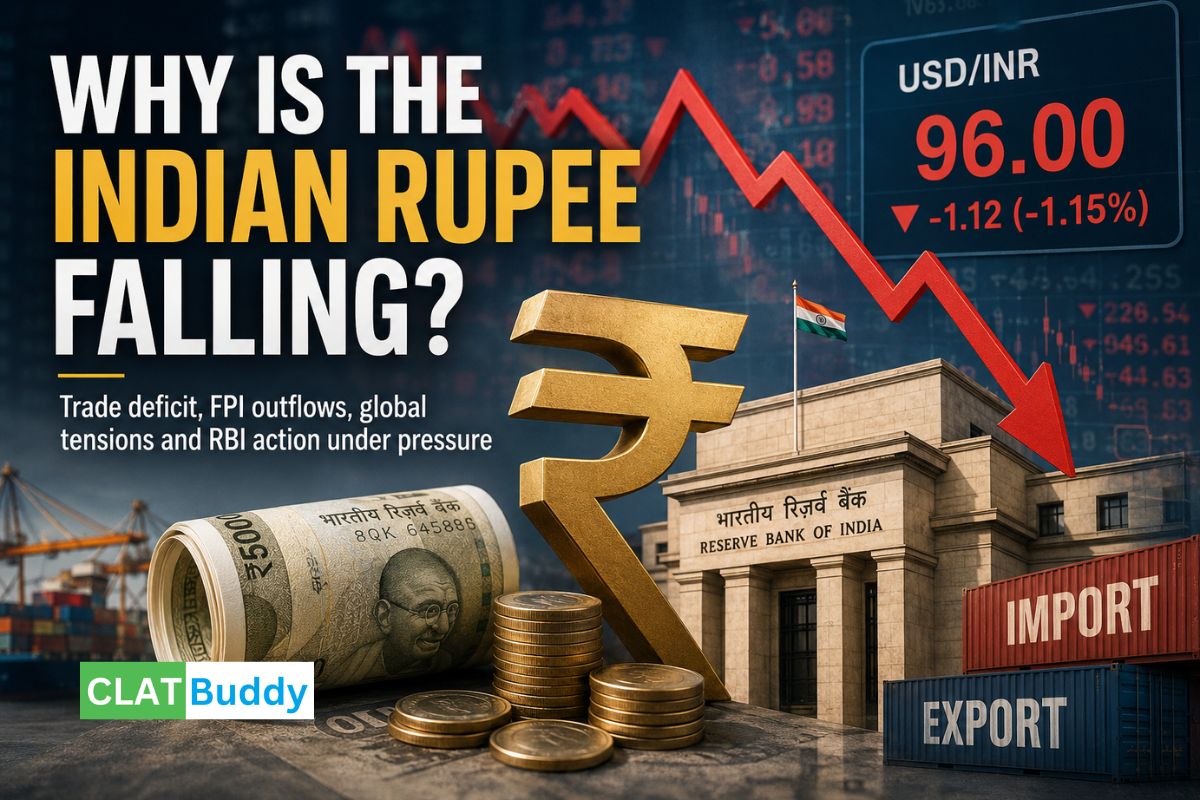
The Indian rupee has witnessed a sharp decline against the U.S. dollar in recent months, crossing the ₹96-per-dollar mark in May 2026 compared to around ₹85 a year ago. The weakening currency has raised concerns about inflation, rising import costs, foreign investment outflows, and broader economic stability. Economists believe that a combination of trade deficits, global uncertainty, and foreign capital movements has intensified pressure on the rupee.
An exchange rate reflects the value of one currency compared to another. In India’s case, the rupee-to-dollar rate indicates how many rupees are required to buy one U.S. dollar. Like any market price, currency values are influenced by demand and supply. When demand for the rupee weakens relative to the dollar, the rupee depreciates.
Trade Deficit Continues To Weigh On The Rupee
One of the biggest structural reasons behind the rupee’s fall is India’s persistent trade deficit. India imports significantly more goods than it exports, especially crude oil, electronics, and machinery. Every time Indian companies purchase imported oil or products, they exchange rupees for dollars, increasing demand for the U.S. currency.
On the other hand, exports create demand for the rupee because foreign buyers convert dollars or euros into rupees while paying Indian exporters. However, India’s export earnings have not been sufficient to offset import payments.
Although India earns substantial foreign exchange through software exports and remittances from Indians working abroad, the country’s current account often remains under pressure. This imbalance weakens demand for the rupee and contributes to depreciation.
Foreign Portfolio Investors Add To Volatility
Foreign Portfolio Investment (FPI) has also played a major role in the recent rupee decline. FPIs mainly invest in Indian stocks and bonds and tend to react quickly to global financial developments.
Preparing for CLAT? Take Your Preparation Further.
Explore structured courses, question banks, notes and preparation resources designed for CLAT aspirants.
Explore CLATBuddy →When global risks increase or U.S. interest rates rise, many investors move money from emerging markets like India back to safer assets in the United States. This process leads to capital outflows from India. Investors sell Indian assets, convert rupees into dollars, and withdraw funds, increasing pressure on the rupee.
Experts note that several major phases of rupee depreciation in the past decade were linked to large FPI outflows and worsening trade balances. The recent weakening of the rupee since May 2025 has also been associated with geopolitical tensions, uncertainty in global markets, and stronger returns available in the U.S.
Falling Rupee Raises Import Costs
A depreciating rupee directly impacts India’s import bill, especially because the country relies heavily on imported crude oil. If oil prices remain high globally while the rupee weakens further, Indian companies end up paying significantly more in rupee terms.
For example, purchasing oil worth $100 would now cost around ₹9,600 at an exchange rate of ₹96 per dollar, compared to ₹8,500 when the exchange rate was ₹85. Higher import costs eventually affect fuel prices, transportation, manufacturing expenses, and inflation across the economy.
The impact is also visible in sectors dependent on imported raw materials, electronics, machinery, and foreign education or travel expenses.
Weak Rupee Can Support Exports
Despite its negative effects, a weaker rupee can make Indian exports more competitive globally. Indian goods become relatively cheaper for foreign buyers when converted into dollars.
For instance, a product priced at ₹1,200 would cost around $12.5 at an exchange rate of ₹96 per dollar, compared to $15 if the exchange rate were ₹80. This pricing advantage can support exports in sectors such as textiles, IT services, and manufacturing.
However, economists caution that currency depreciation alone cannot guarantee export growth. Supply-side challenges, infrastructure gaps, and global demand conditions also influence India’s export performance.
RBI Plays A Critical Defensive Role
The Reserve Bank of India plays a crucial role in stabilising the rupee during periods of sharp volatility. The central bank uses India’s foreign exchange reserves to intervene in currency markets whenever necessary.
When investors rapidly sell rupee assets and demand dollars, the RBI can sell dollars from its reserves to support the rupee. This helps reduce panic in markets and slows excessive depreciation.
India’s forex reserves remain relatively strong despite recent market pressures. As of March 2026, reserves reportedly stood at around $691 billion, providing sufficient import coverage for several months. These reserves act as an important financial buffer during periods of global uncertainty.
Global Tensions And Oil Risks Remain Major Concerns
The future direction of the rupee will depend heavily on international developments. Rising geopolitical tensions, uncertainty in financial markets, and fluctuations in crude oil prices remain major risks for India.
Higher oil prices increase India’s import burden, while tighter monetary policies in developed economies can trigger further foreign capital outflows. Economists argue that India may need long-term measures to reduce dependence on imported oil, strengthen domestic manufacturing, and manage speculative capital flows more effectively.
While the RBI continues to defend the rupee through market intervention, the broader challenge lies in improving India’s external balance and reducing vulnerabilities to global financial shocks.
Calling all law aspirants!
Are you exhausted from constantly searching for study materials and question banks? Worry not!
With over 15,000 students already engaged, you definitely don't want to be left out.
Become a member of the most vibrant law aspirants community out there!
It’s FREE! Hurry!
Join our WhatsApp Groups (Click Here) and Telegram Channel (Click Here) today, and receive instant notifications.
Need More Than Just Written Content?
Explore recorded lessons, structured learning resources and practice material to strengthen your CLAT preparation.
Explore Learning Resources →